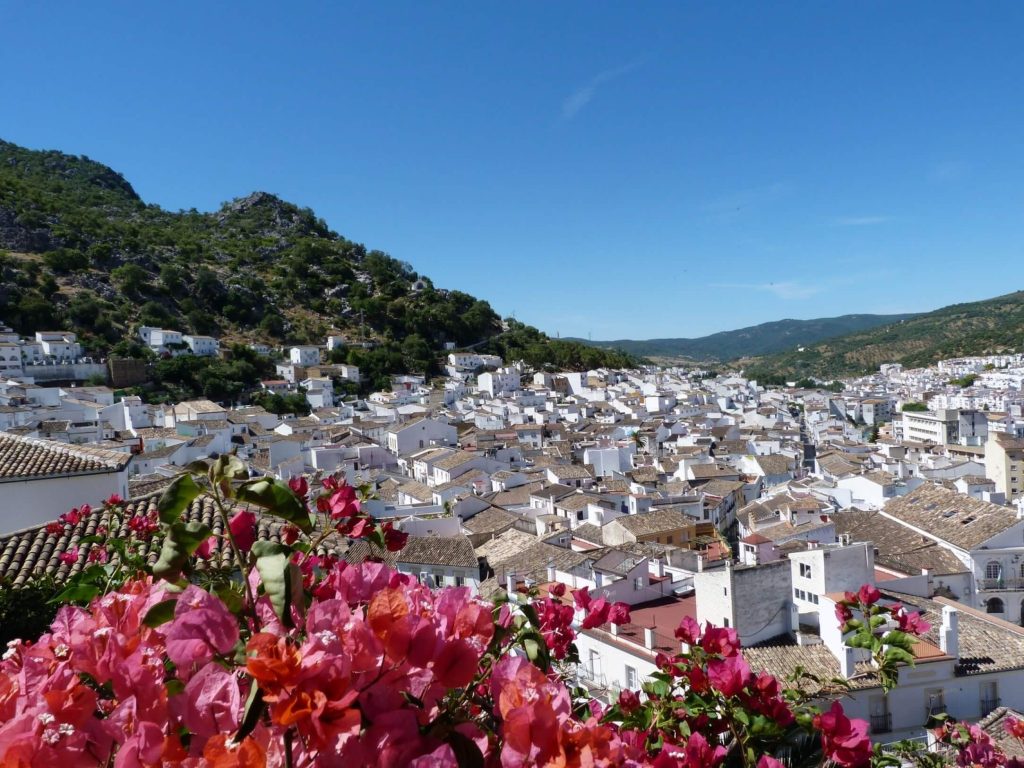
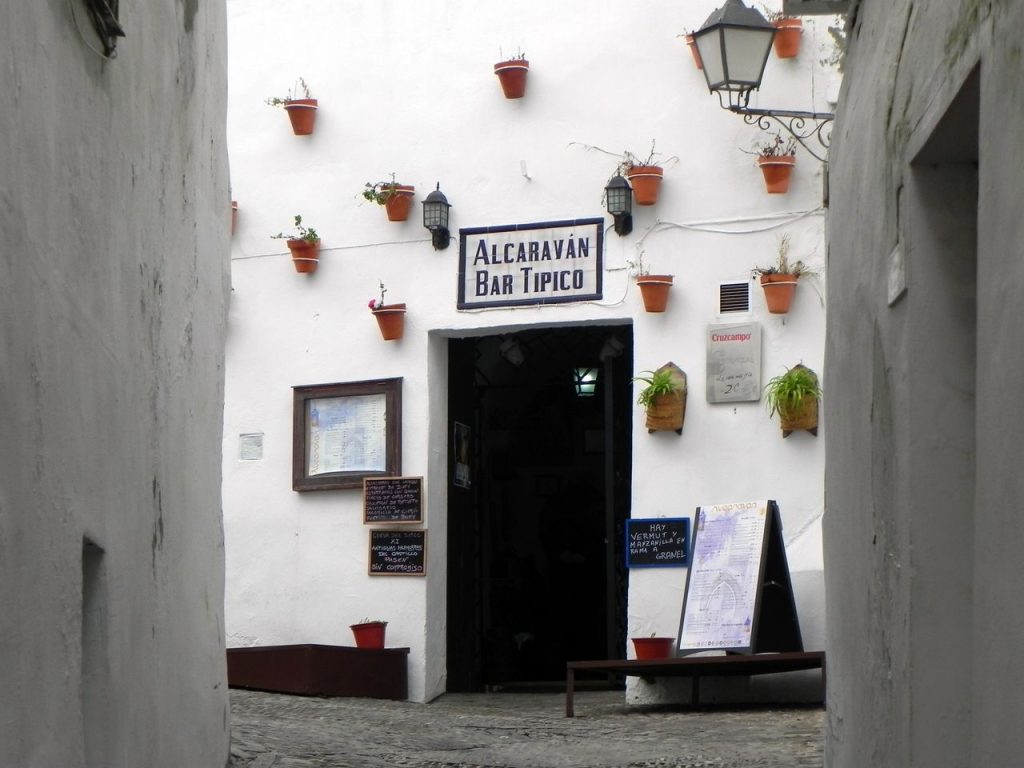
There are 19 of them, scattered right across the Sierra de Cádiz, and they don’t all deserve the same amount of time. Here’s the complete list, the mental map for linking them up, and ready-made routes of 2, 3 and 5 days.
The white villages of Cádiz are the 19 whitewashed municipalities that make up the Route of the White Villages, in the Sierra de Cádiz. The five unmissable ones are Arcos de la Frontera, Grazalema, Zahara de la Sierra, Setenil de las Bodegas and Olvera. You tour them by car, they are all less than an hour from each other, and with 3 days you see the essentials without rushing.
Some trips make sense at the very first bend. You climb up from the farmland, a mountain pass appears and, clinging to the rock, a white village that looks painted onto the green. Half an hour later you’re in a completely different one: this one lives off cheese, that one off leather, another has its houses tucked in underneath a crag.
That’s the Sierra de Cádiz. And this guide gets straight to the point: which villages they are, which to prioritise if you’re short on time, how long it takes to get from one to the next, and how to plan the route so you don’t spend the whole trip behind the wheel. Settle in, we’re off.
What the white villages of Cádiz are (and why they’re white)
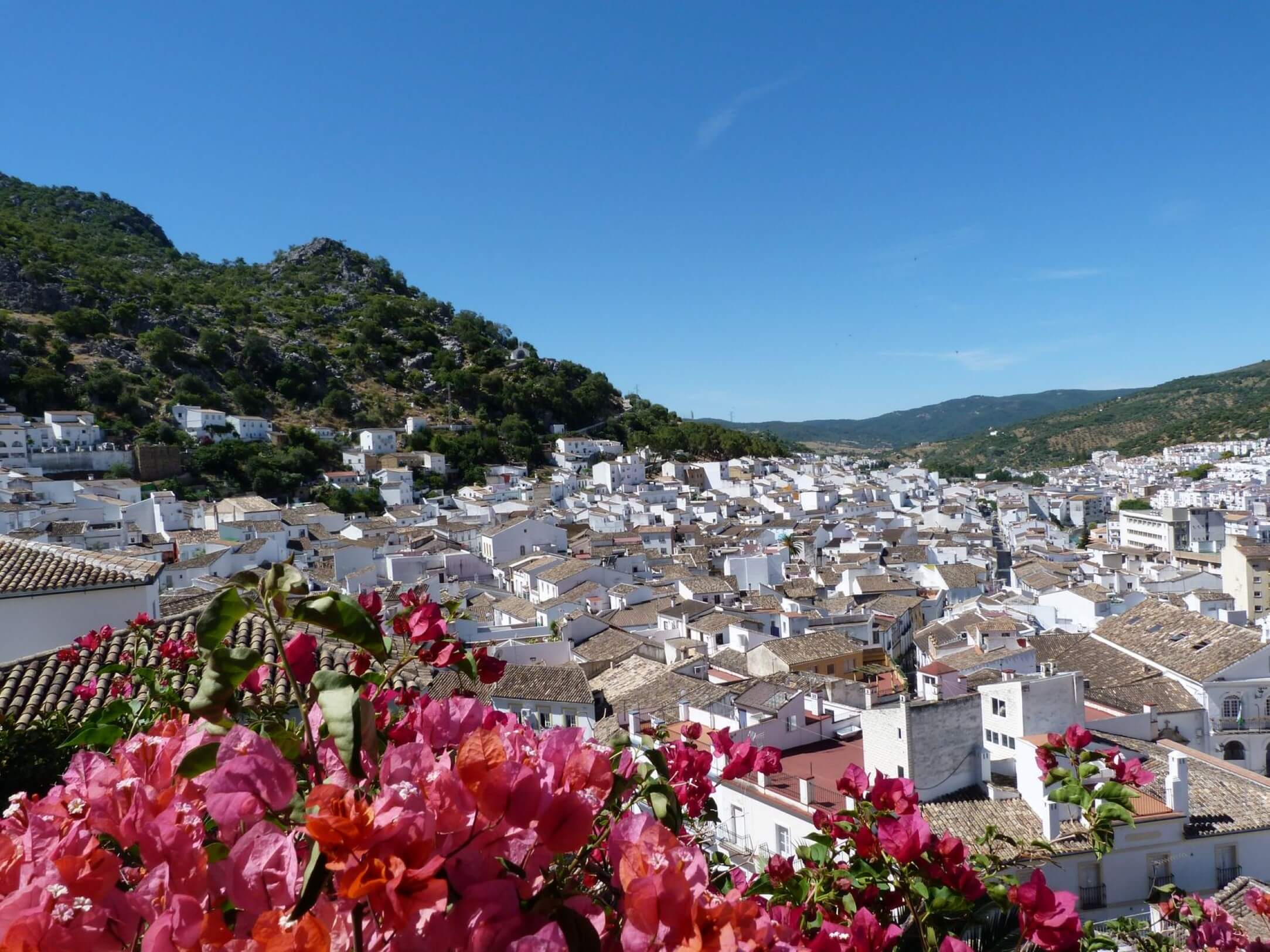
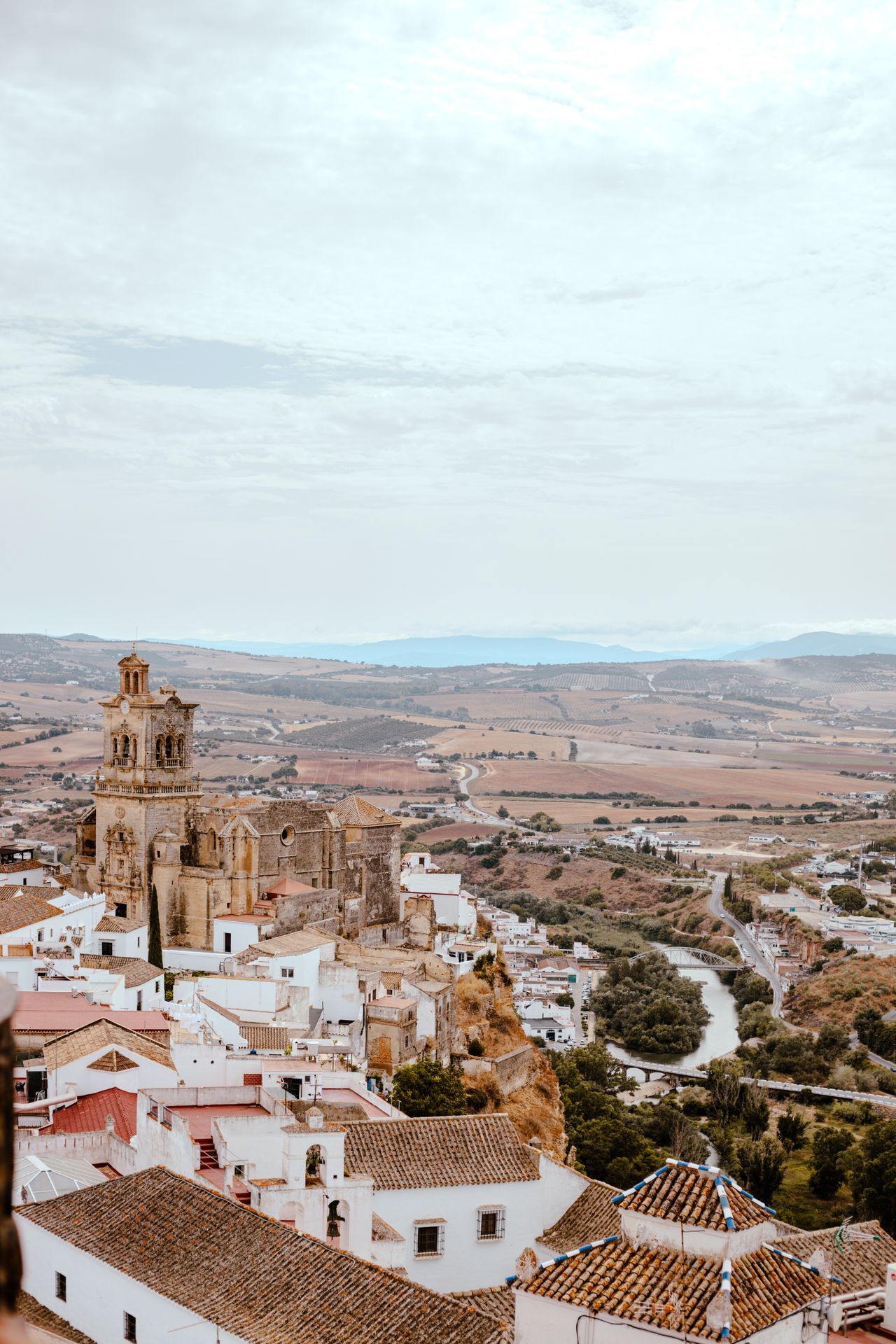
They are a group of inland municipalities with whitewashed historic centres, heirs to the Andalusi street plan: narrow streets, steep slopes, two-storey houses and interior courtyards.
The white isn’t decorative, it’s functional. Lime reflects the light and keeps the houses cool in summer, as well as acting as a natural disinfectant on the walls. Houses were whitewashed —and in many villages still are— once or twice a year.
Most of them were the frontier between the Nasrid kingdom of Granada and Christian Castile for centuries. Hence the hilltop castles, the watchtowers and that “de la Frontera” surname you find all over the province
How many white villages there are in Cádiz: the complete list
The Route of the White Villages usually brings together 19 municipalities in the Sierra de Cádiz. Some versions extend the list with towns in La Janda such as Vejer or Medina Sidonia, and even with Ronda, already in Málaga province.
The short answer:
19 white villages in the Sierra de Cádiz. If you add Benamahoma, La Janda and Ronda, the figure you’ll see quoted can go as high as 23
The 19 white villages, one by one
| # | Village | What makes it unique |
|---|---|---|
| 1 | Arcos de la Frontera | Monumental old town above a vertical cliff |
| 2 | Grazalema | Natural park, Spanish fir forest and the most complete village |
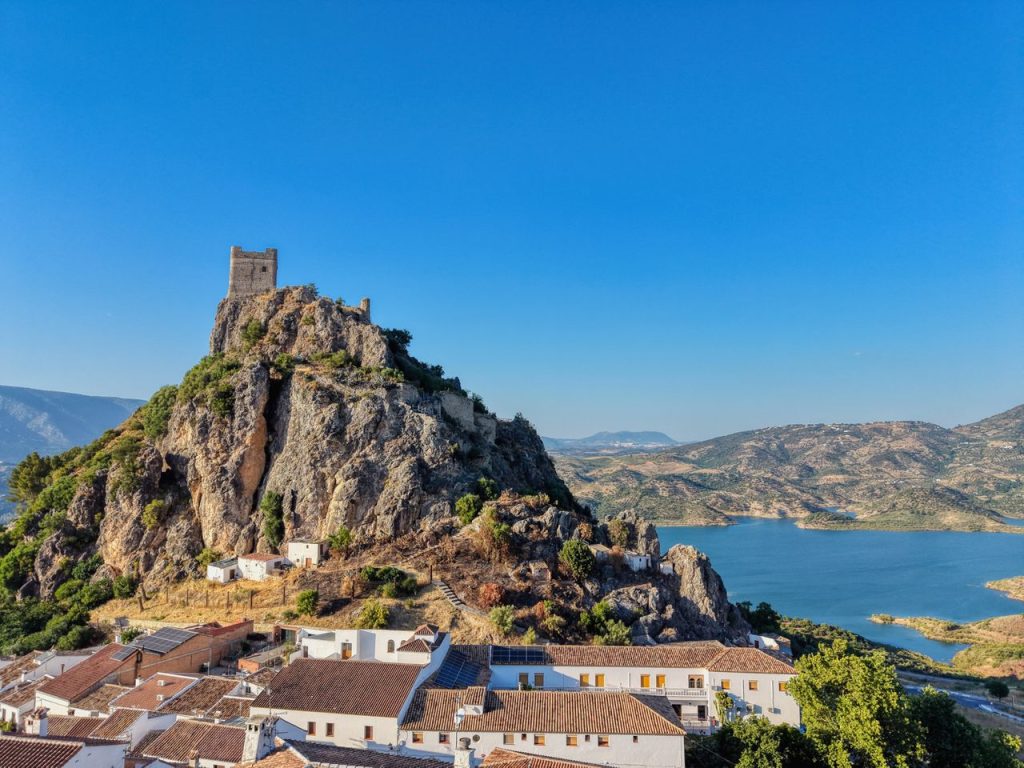
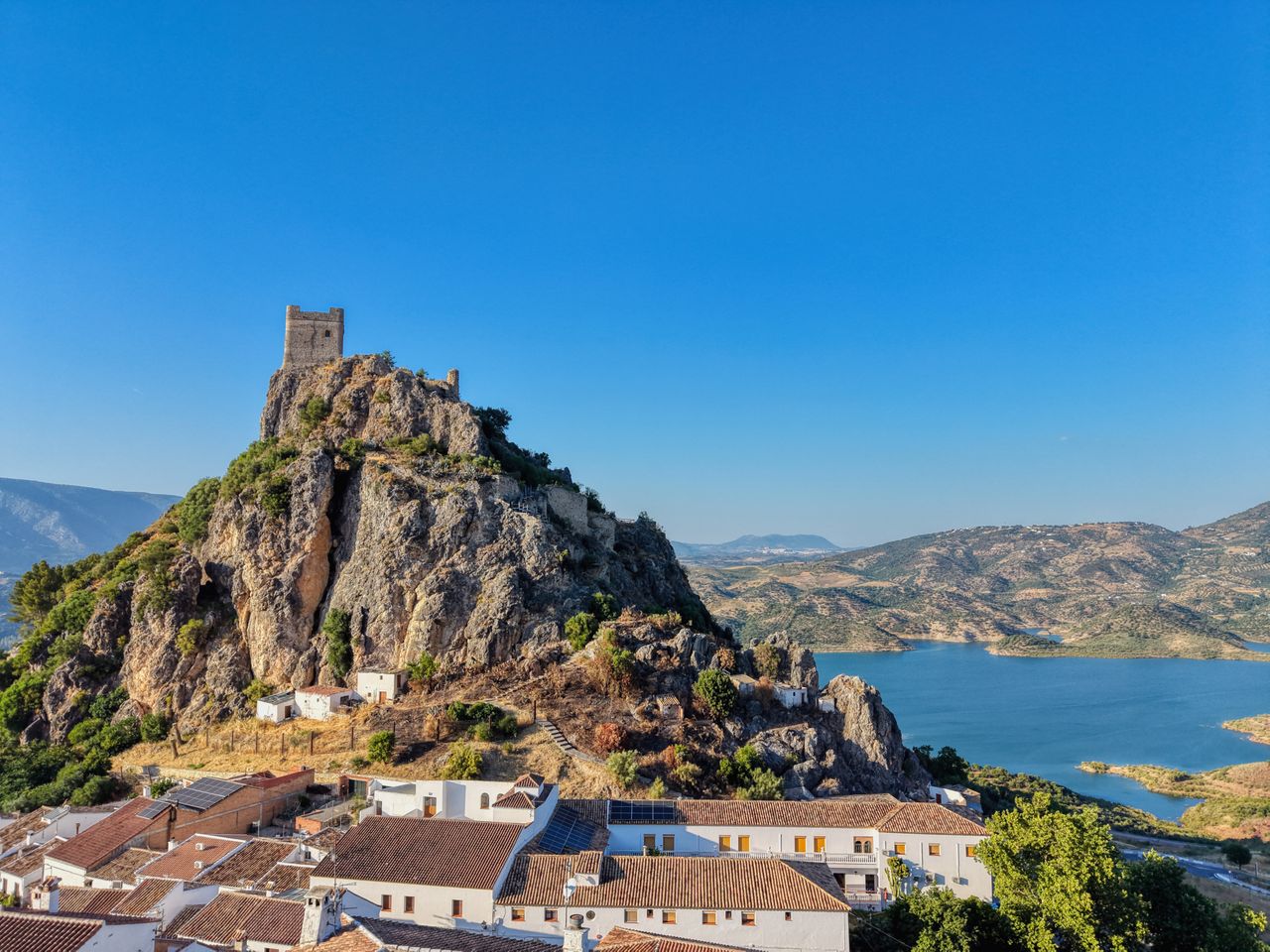
| 3 | Zahara de la Sierra | Nasrid castle above a turquoise reservoir |
| 4 | Setenil de las Bodegas | Houses built under the rock |
| 5 | Olvera | Castle, church and the Vía Verde de la Sierra |
| 6 | Ubrique | Capital of luxury leather goods |
| 7 | Benaocaz | Intact Nasrid quarter and Roman road |
| 8 | Villaluenga del Rosario | The highest in Cádiz and the cheese capital |
| 9 | El Bosque | Gateway to the park and the Majaceite river walk |
| 10 | El Gastor | The «balcony of the white villages» |
| 11 | Algodonales | Andalusia’s paragliding capital |
| 12 | Prado del Rey | Olive oil, farmland and the Roman remains of Iptuci |
| 13 | Torre Alháquime | Small, walled and very photogenic |
| 14 | Alcalá del Valle | El Tomillo dolmen and traditional pastries |
| 15 | Puerto Serrano | End of the Vía Verde de la Sierra |
| 16 | Bornos | Renaissance palace and reservoir |
| 17 | Villamartín | Alberite dolmen, one of the oldest in Europe |
| 18 | Espera | Fatetar castle and lagoon |
| 19 | Algar | A planned village founded in the 18th century |
The unofficial number 20: Benamahoma is usually added to this list — a hamlet belonging to Grazalema that works as a village in its own right and is the end point of the Pinsapar trail.
Which is the prettiest white village in Cádiz?
It depends on what you’re after, and it’s worth saying so clearly before you book anything:
The most spectacular
Setenil de las Bodegas.
The houses under the rock are in a league of their own.
the most monumental
Arcos de la Frontera.
The one that works best if heritage and viewpoints are your thing.
the best postcard
Zahara de la Sierra.
The castle reflected in the turquoise reservoir.
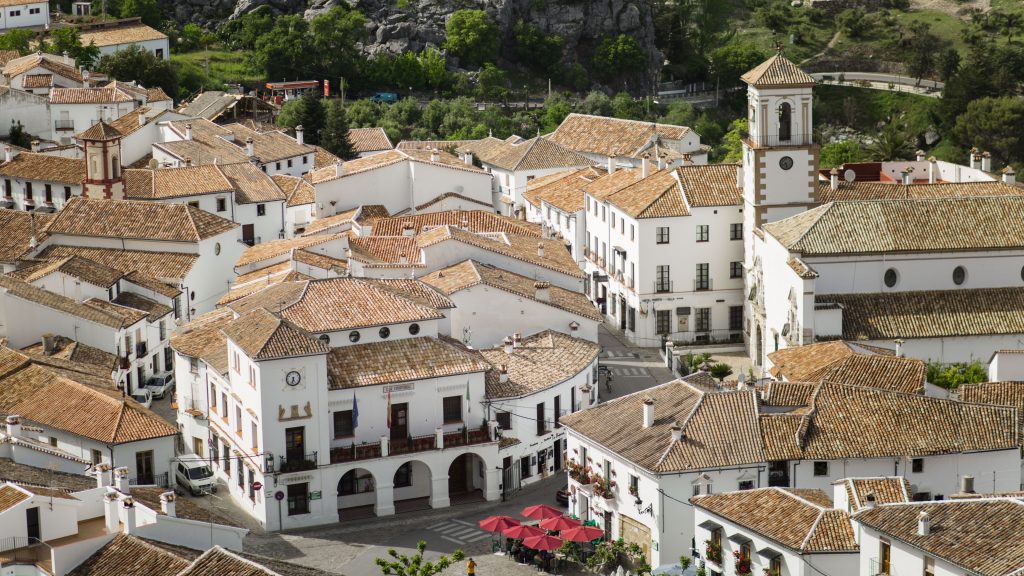
The most complete: Grazalema
There’s not much debate here. It’s the only one that combines:
- A genuinely beautiful village
- A natural park at the end of the street
- Trails that set off from the village itself
- Mountain cooking with an identity of its own
The practical difference: the others can be seen in two or three hours; in Grazalema you can spend three days without repeating a plan.
The unmissable white villages, one by one
They’re listed in geographical order, west→east, which is the natural order if you’re arriving from Seville, Jerez or Cádiz.
Arcos de la Frontera
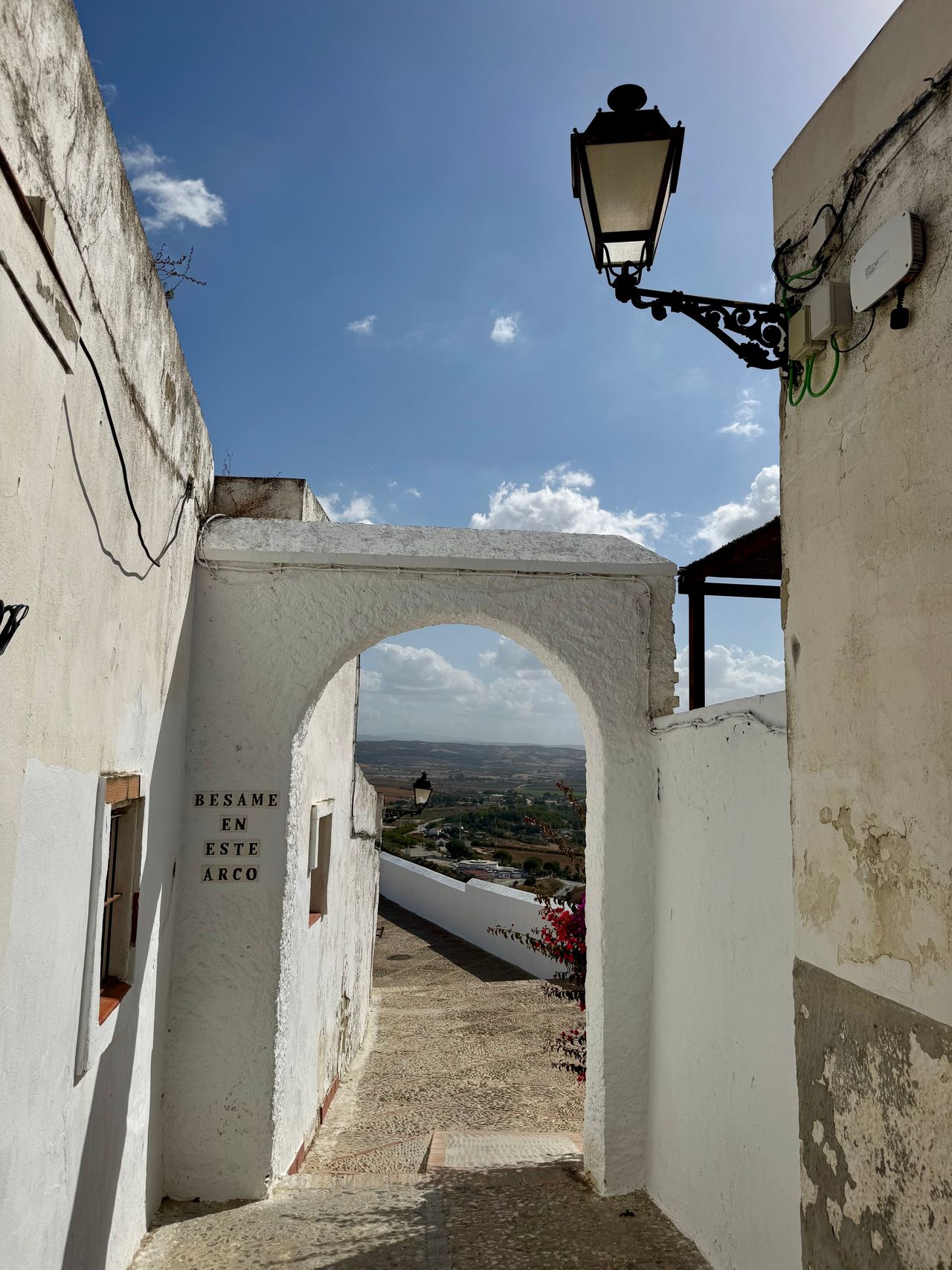
The gateway to the route. An old town on top of a vertical cliff, the Basilica of Santa María, a privately owned castle and the Mirador de la Peña, which looks out over the whole countryside. Wander up the Cuesta de Belén and hold out until sunset if you can. Recommended time: half a day.
El Bosque and Benamahoma
The gateway to the Sierra de Grazalema Natural Park. El Bosque is where you’ll find the Visitor Centre (maps, information and permits) and the start of the Majaceite river walk: an easy 4.7 km, with shade and water, to Benamahoma. The best in the whole sierra for walking with children. Recommended time: half a day including the walk.
Grazalema
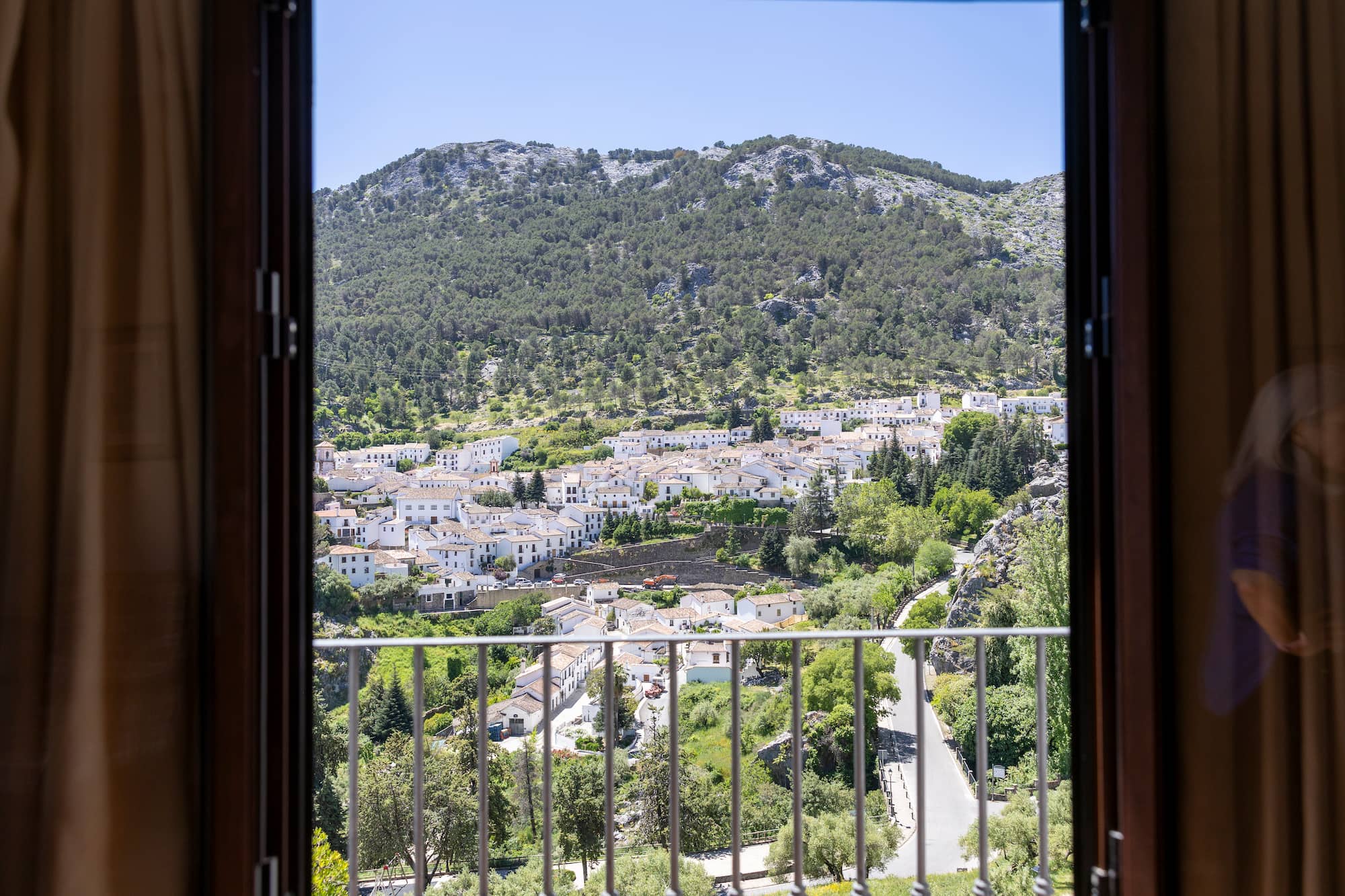
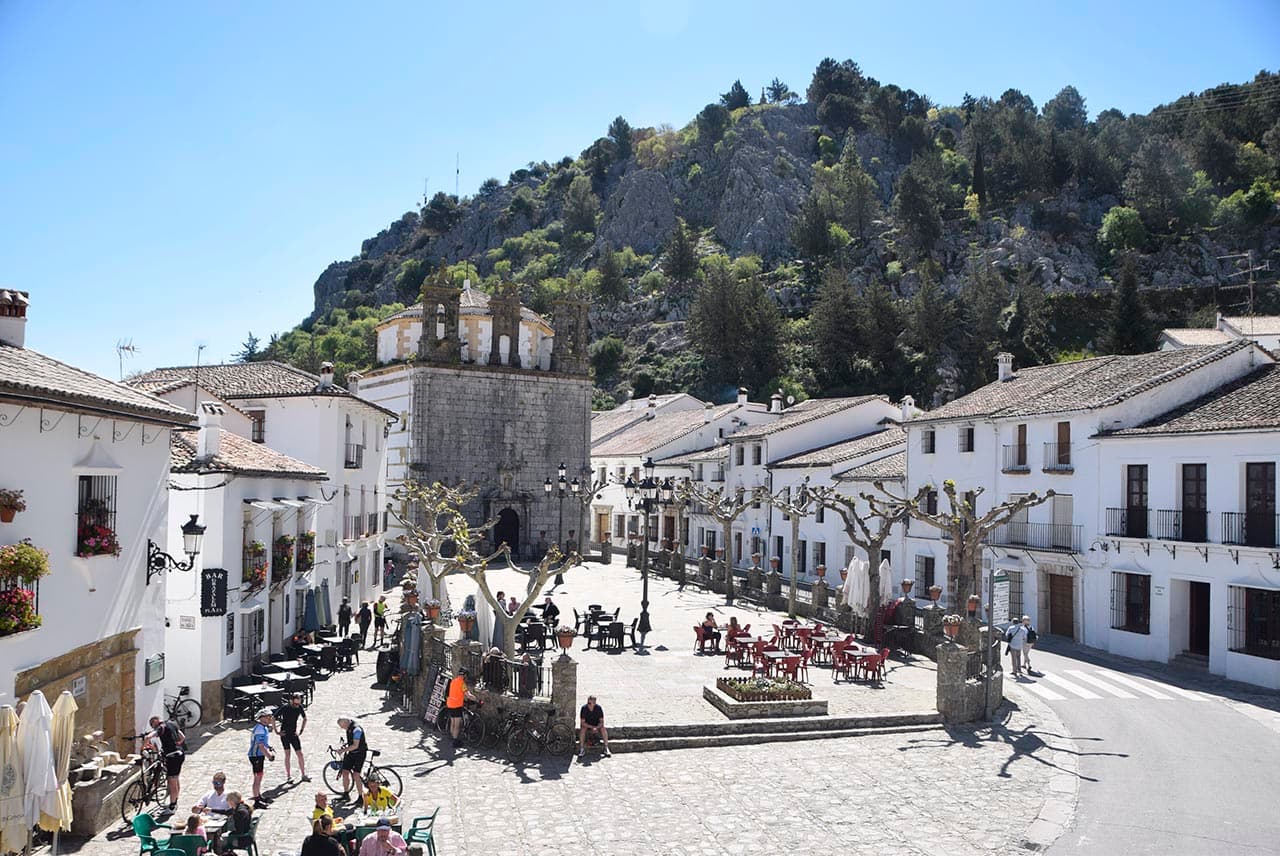

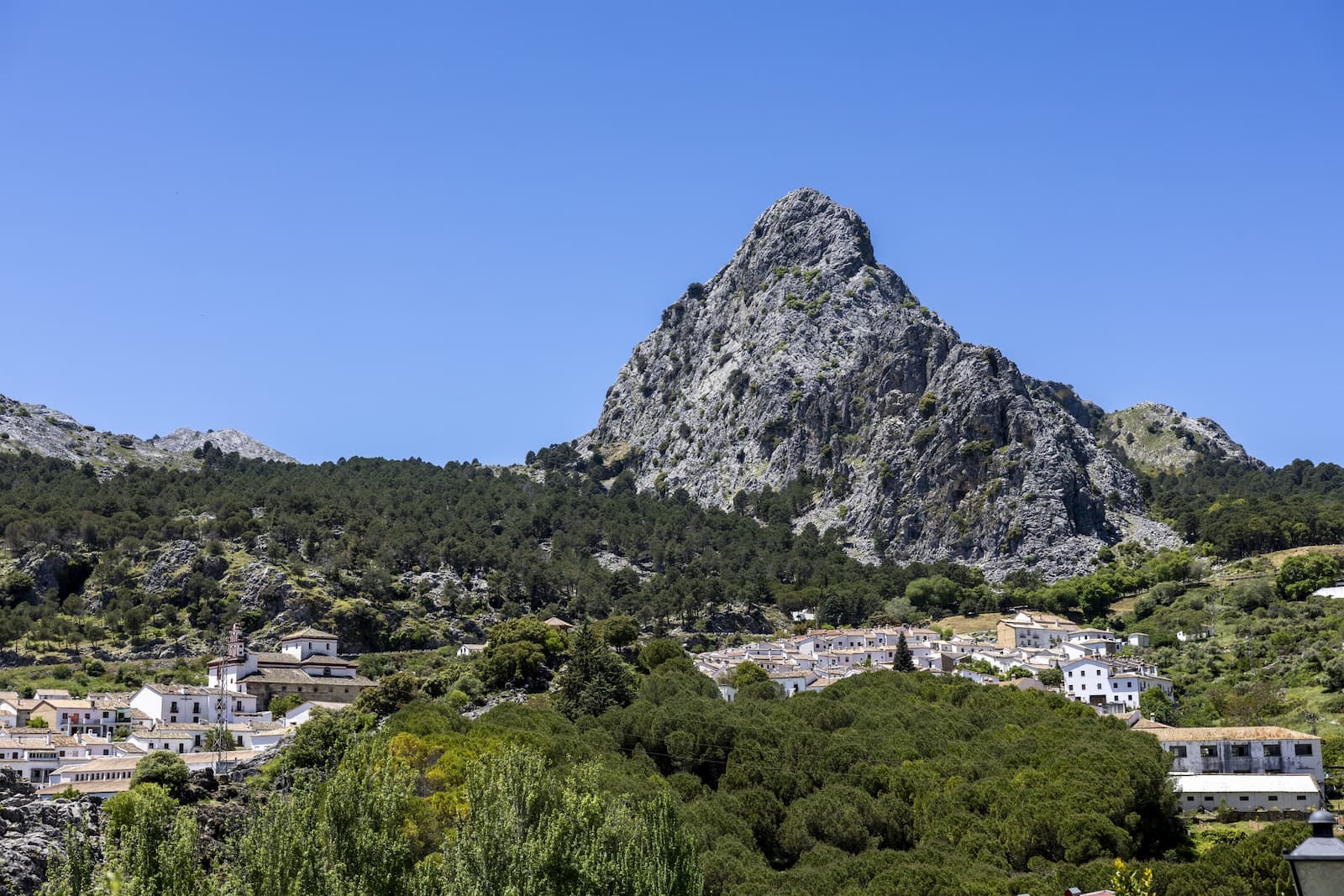
The heart of the sierra, at 823 m above sea level and at the foot of the Peñón Grande. It was Spain’s first Biosphere Reserve (1977) and it’s the rainiest spot on the Iberian Peninsula, with more than 2,000 mm a year: that’s why everything is so green.
What to see:
- Plaza de España and the Fuente de los Caños: the centre of everything, with the Iglesia de la Aurora at the far end.
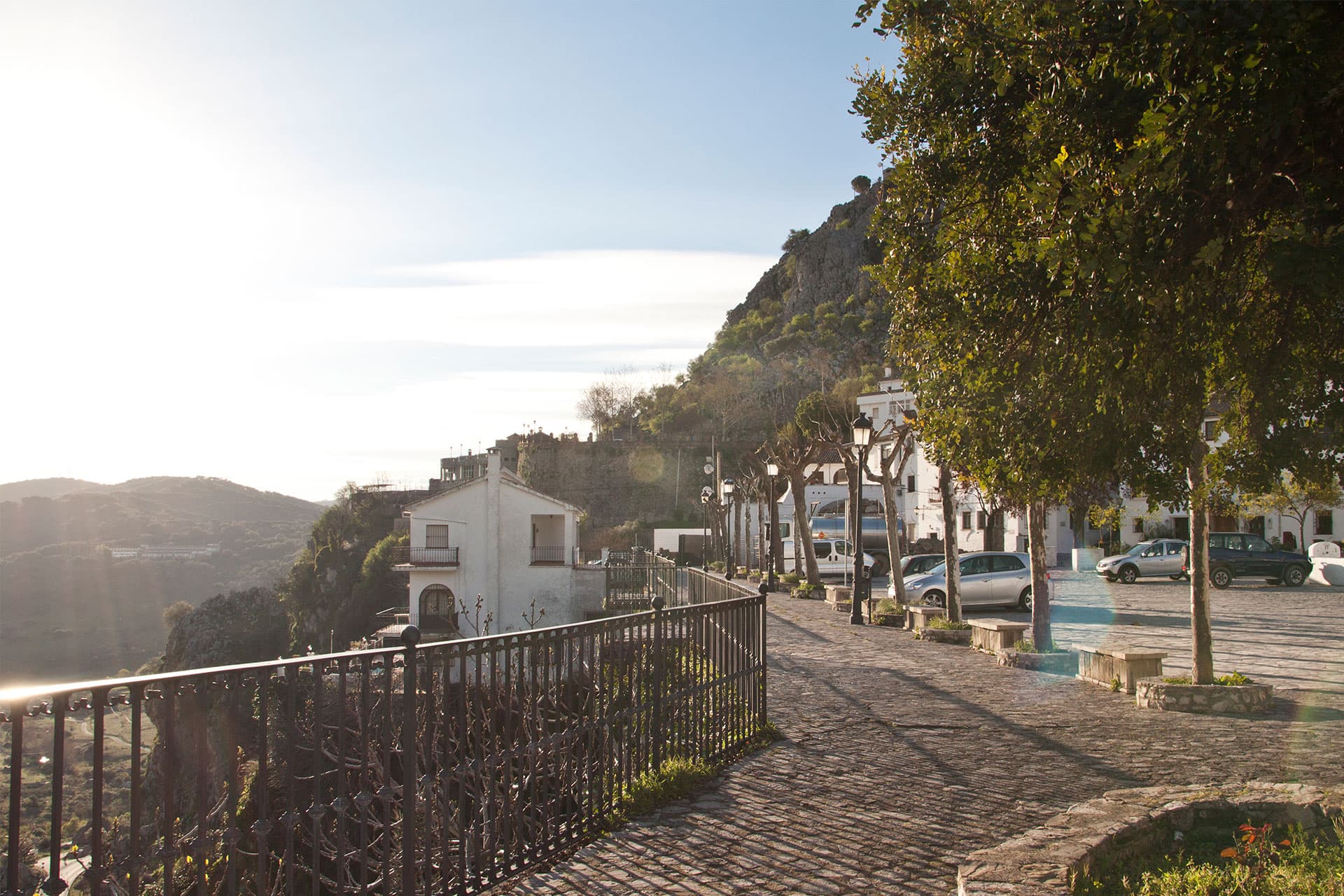
- Mirador de los Asomaderos: a 10-minute walk from the square and the best sunset in the village.
- Textile Craft Museum: this is where the famous Grazalema blanket was woven.
- The park trails: the Pinsapar, the Garganta Verde and El Torreón start practically in the village. They require a permit in advance. → We cover it all in our [guide to the Pinsapar of Grazalema]
What to eat: sopa de Grazalema (bread, jamón, chorizo, mint and a poached egg), payoyo cheese, cured meats from the sierra and amarguillos for dessert. Recommended time: from one day to three, depending on how much you walk.
Benaocaz
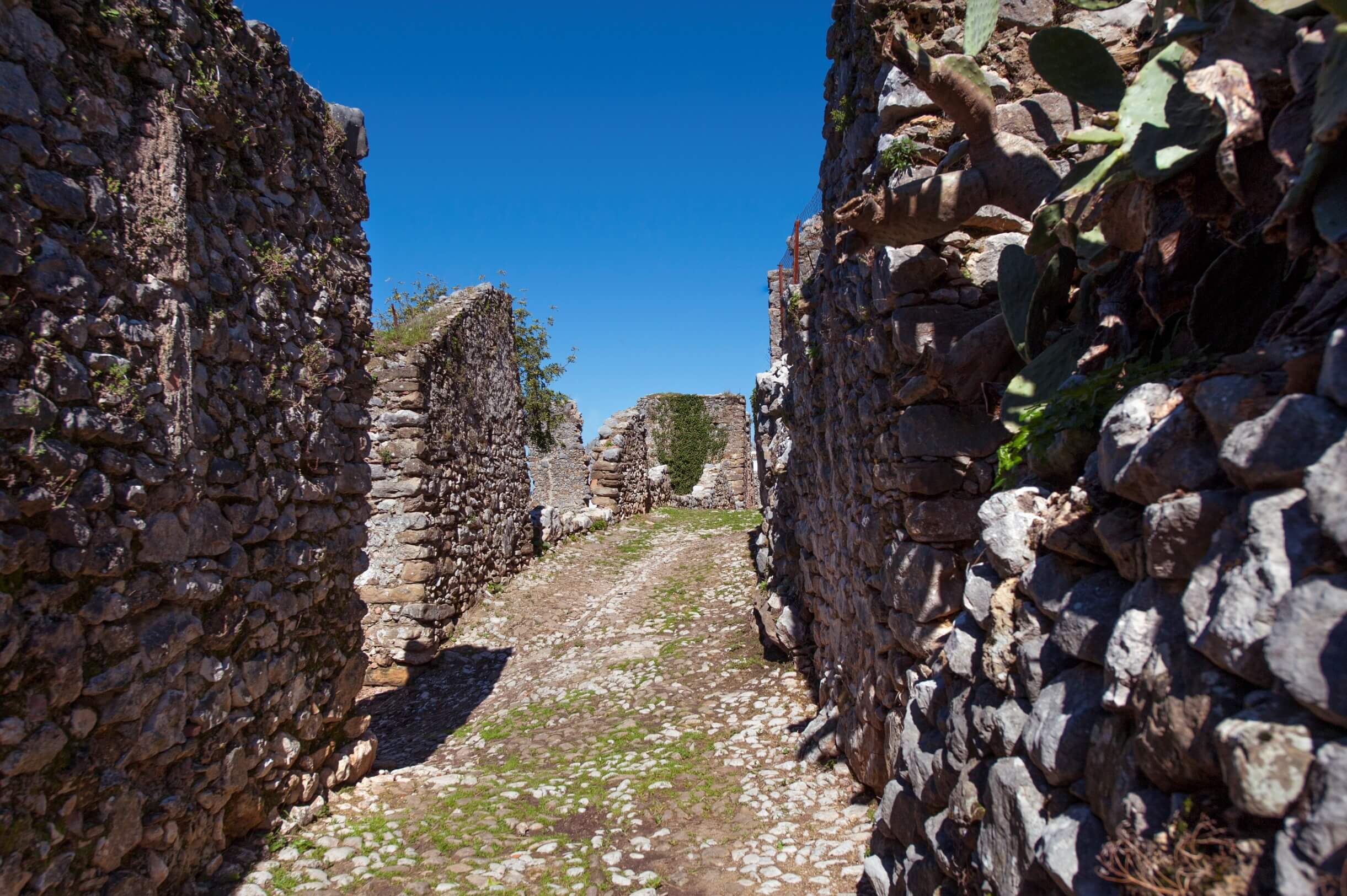
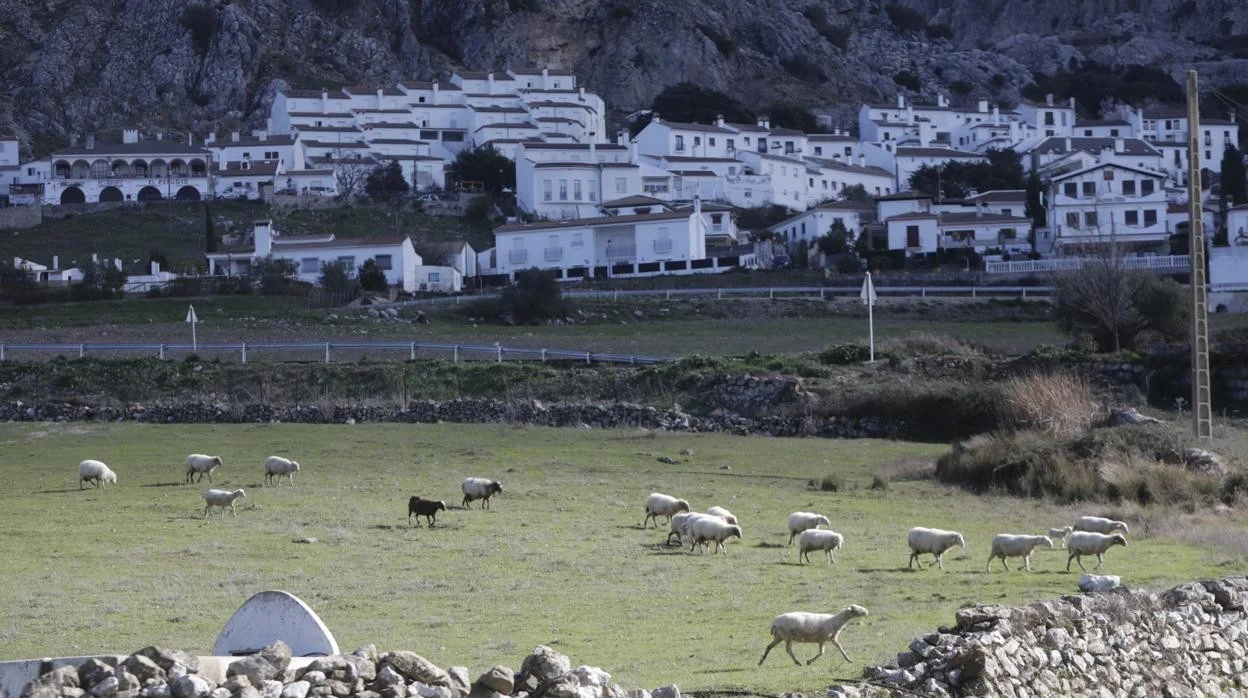
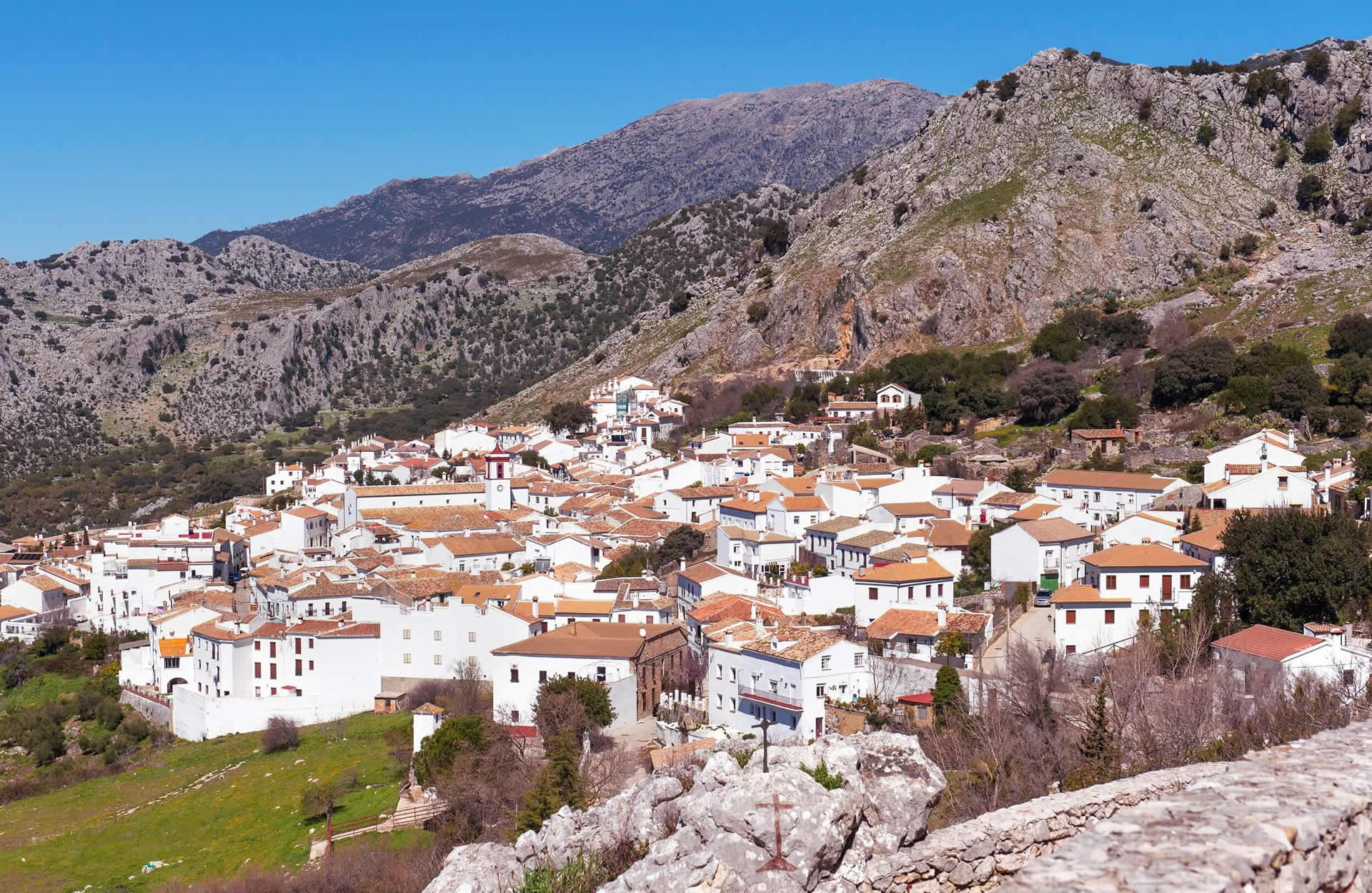
The most Andalusi of them all. Its Nasrid quarter keeps the medieval street plan intact, and the Roman road drops from here down to Ubrique in 4 km. Quiet and not overrun. Recommended time: 2 hours, or half a day with the Roman road.
Villaluenga del Rosario
The highest village in the province and the capital of payoyo cheese. It has a bullring wedged into the rock (1892) and a cheese fair in autumn. An obligatory stop to fill the fridge. Recommended time: 1-2 hours.
Ubrique
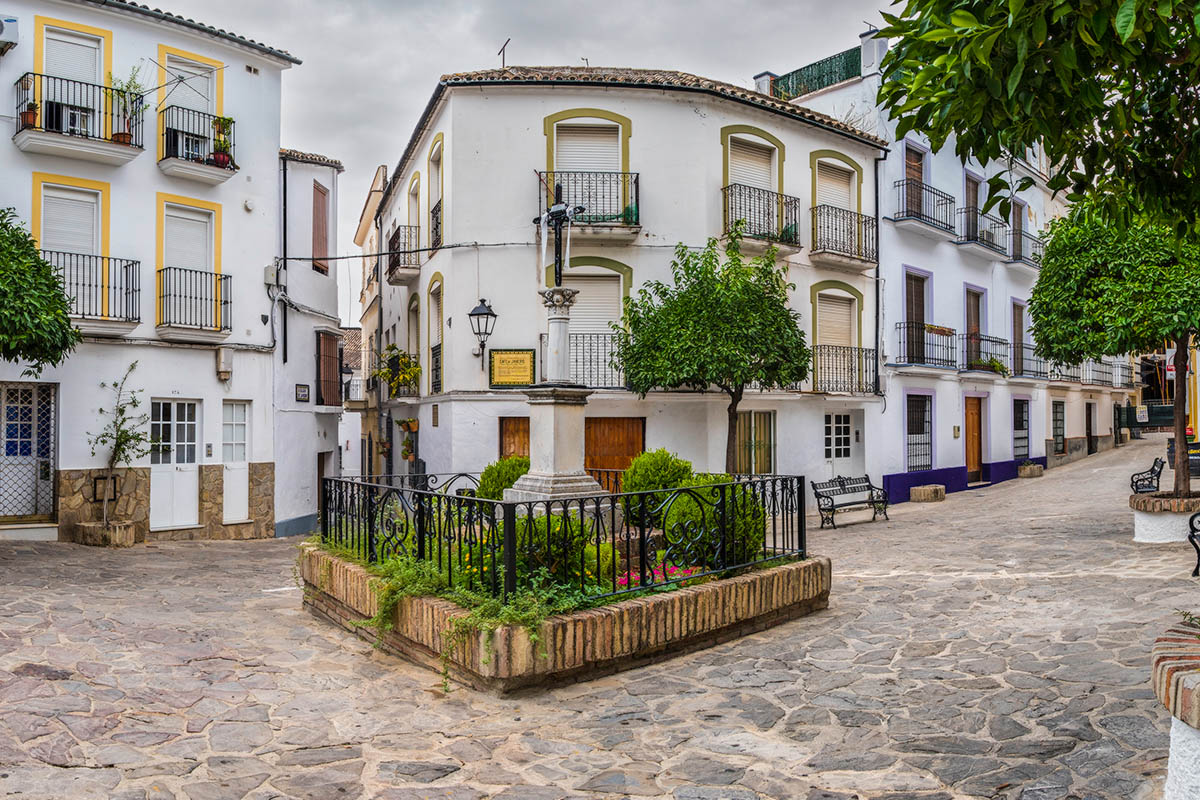
The leather town: a good part of Europe’s luxury leather goods are made here, and you can tell in the shops in the centre. A steep old town and the feel of a large village. Recommended time: half a day.
Zahara de la Sierra
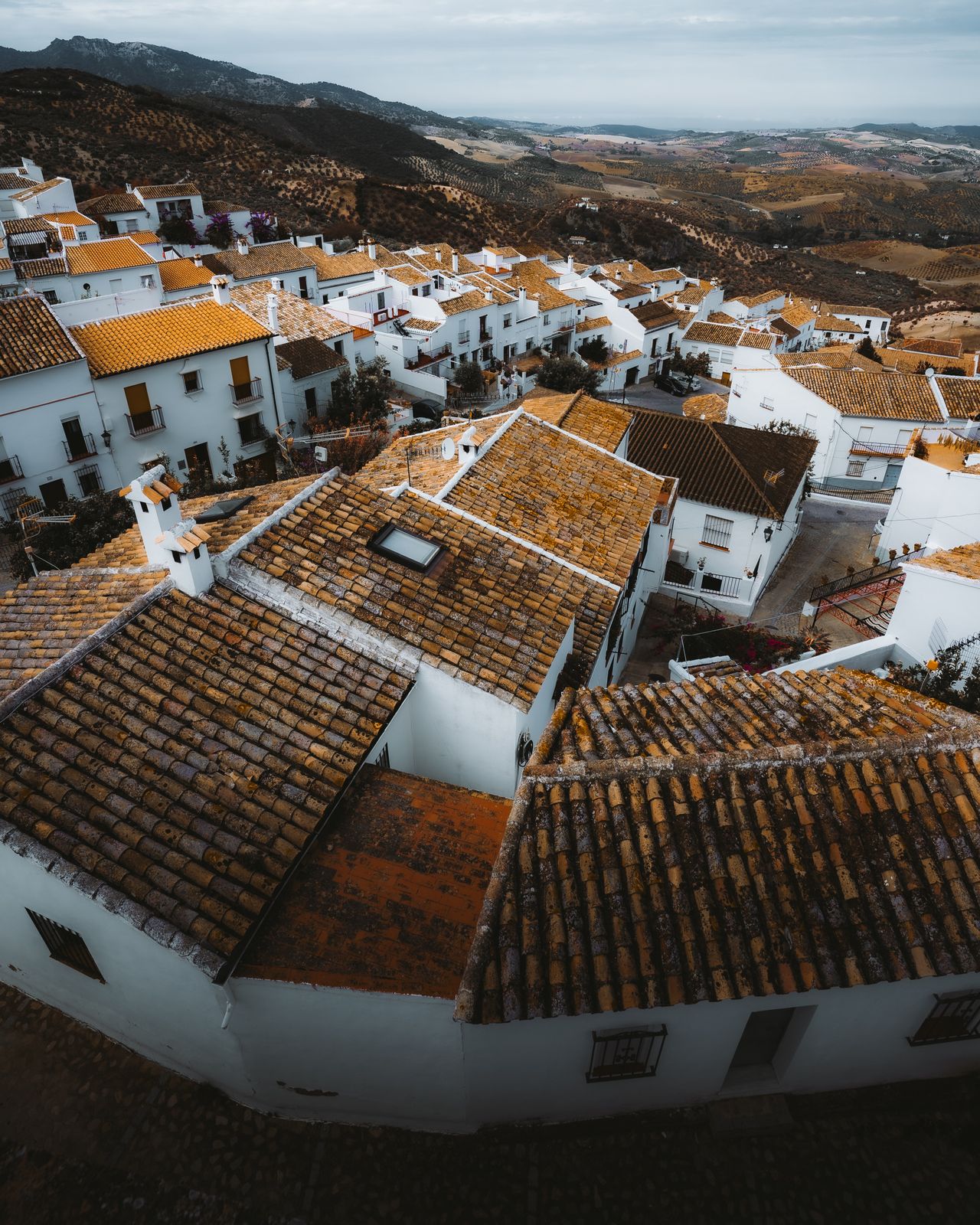
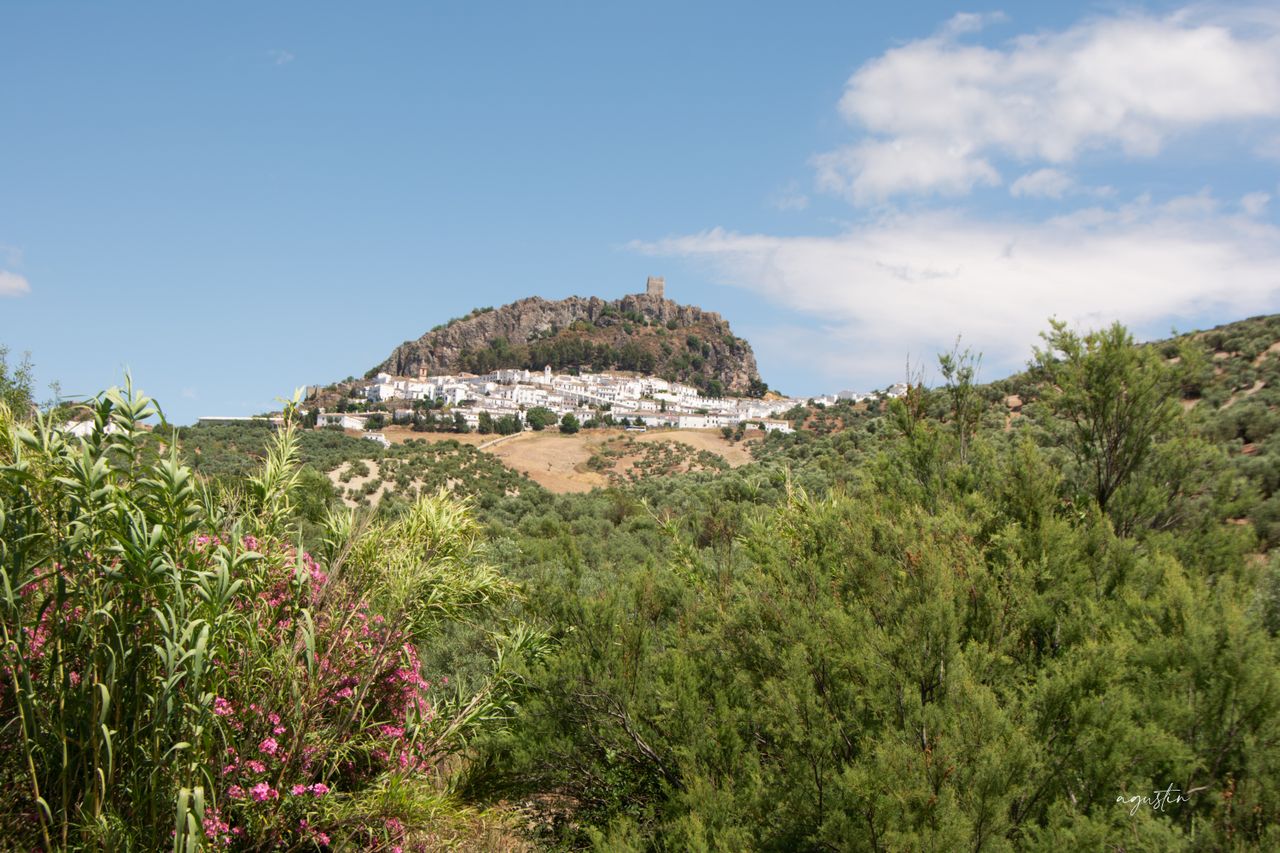
A Nasrid castle above, a turquoise reservoir below and the Puerto de las Palomas in between, one of the most beautiful stretches of road in Andalusia. Climb the keep at sunset. In summer, the swimming area at the reservoir saves the day. Recommended time: half a day.
Olvera
You can see it from miles away: an Arab castle and a neoclassical church competing for the summit. This is the start of the Vía Verde de la Sierra, 36 almost flat km to Puerto Serrano, with lit tunnels and the Peñón de Zaframagón, home to a large colony of griffon vultures. Recommended time: half a day, or a full one with the Vía Verde.
Map and distances: how the white villages connect

Everything under 1 h away

Recommended base: Grazalema

Mountain roads

6 villages under 25 min away
The key to this trip is understanding that the sierra is compact. Almost everything is less than an hour away, but the roads are mountain roads: don’t count on motorway averages.
Distances from the geographical centre of the route
| From Grazalema to… | Distance | Time |
|---|---|---|
| Benamahoma | 12 km | 15 min |
| Benaocaz | 12 km | 20 min |
| Villaluenga del Rosario | 15 km | 20 min |
| El Bosque | 16 km | 20 min |
| Zahara de la Sierra | 17 km | 25 min |
| Ubrique | 22 km | 30 min |
| Ronda (Málaga) | 30 km | 40 min |
| Olvera | 40 km | 45 min |
| Setenil de las Bodegas | 40 km | 45 min |
| Arcos de la Frontera | 60 km | 1 h |
The white villages route in 2 and 5 days
Both itineraries are built around sleeping in the same place every night and fanning out from there. The timings are realistic: they include driving time, parking time (which in Zahara and Arcos is no small thing) and meals. If something doesn’t fit, we say so.
Read this before you plan: four trails need a permit
El Pinsapar, El Torreón, the Garganta Verde and the Llanos del Rabel are in a reserve zone and require free advance authorisation from the Junta de Andalucía. You apply online, giving your ID number, the date, the route and the number of people. From 1 June to 15 October the Pinsapar can only be done with an accredited company, and during fire-risk season trails can be closed without notice. The itineraries below use freely accessible trails, except where stated.
Weekend (2 days) based in Grazalema
THE IDEA
Give up on Arcos. It’s more than an hour away at the other end of the sierra and, in two days, you either see villages in passing or you really see Grazalema. This version goes for the second option and keeps just one postcard village, Zahara, for the Sunday.
route details
- Where you sleep: Two nights in Grazalema.
- Total driving: around 50 km.
- On foot: between 8 and 14 km depending on the trail you choose.
Two nights in Grazalema and the four villages with the biggest visual impact. Hiking is sacrificed: there’s no room for it.
Day 1 · 55 km of driving
Arrive and walk on the same day
- Until 11:00 · Arrival. It’s an hour and a quarter from Jerez, about two hours from Seville and a little under two from Málaga via Ronda. Leave the car at Los Asomaderos or on the way up towards the Tajo Rodillo campsite and forget about it until tomorrow: the whole village can be covered on foot.
- 11:30 · Camino de los Charcones. The perfect trail for your first day, because it sets off from the village itself. It links Grazalema with the Puerto del Boyar following the Guadalete, among mastic, rockrose and hawthorn, and it’s easy to spot griffon vultures gliding over the cliffs. It’s about 2 km each way, with a gentle climb. At the top, at the pass, is the official source of the river Guadalete, the second longest in Andalusia. There and back at an easy pace: two hours.
- 14:00 · Lunch in Grazalema. Sopa grazalemeña, payoyo cheese, cured meats from the sierra. In autumn, game.
- 16:30 · The village. Plaza de España with the Peñón Grande behind it, the church of Nuestra Señora de la Aurora, the parish church of La Encarnación and the textile museum next to the last working blanket factory: the visit is free and takes about ten minutes, and it explains why the village was known as “Cádiz el chico” between the 17th and 19th centuries. Careful: it opens Monday to Thursday until 18:30 and on Fridays only until 14:00, so if you arrive on a Saturday, this one falls through. Finish by walking down the medieval cobbled road, a few hundred metres of paved path that was the traditional way up to the village before the roads existed.
- Sunset. Los Asomaderos first, and then wander up to Los Peñascos, in the upper part of the village, to see the rooftops from above with nobody around. If you’d rather drive, the Puerto del Boyar viewpoint is five minutes away.
Careful: the Plaza del Cabildo in Arcos doubles as a car park and is usually full. Don’t count on leaving the car there.
Day 2 · 55 km of driving
A big trail in the morning, Zahara in the afternoon
- 08:30 · The trail of the weekend.
- El Pinsapar (with authorisation). Around 6 hours, point to point, with a very steep ascent at the start; it begins 2 km from Grazalema and ends at the Los Linares campsite in Benamahoma. The Spanish fir forest is the reason this is a Biosphere Reserve. As it’s a linear route that finishes in a different village, you either leave a car in Benamahoma or walk back the way you came.
- 14:00 · Lunch in Grazalema and pack up.
- 15:30 · Puerto de las Palomas and Zahara de la Sierra. The CA-9104 climbs in tight bends up to the viewpoint and drops down to the reservoir: 17 km that take 25 minutes and make up the prettiest road in the sierra. In Zahara, park in Plaza Lepanto and walk up El Fuerte street to the Torre del Homenaje, practically all that survives of the 13th-century castle, at 605 metres. Access is free and unrestricted; to see inside you need to ask at the tourist office in Plaza del Rey. At the top there are remains of the medieval Nasrid town.
- 18:30 · Departure. From Zahara you join the A-382 towards Seville and Jerez. If you’re heading back via Málaga, Setenil is 40 minutes away and is worth the stop even a short one.
The complete route (5 days) based in Grazalema
Why this one and not another: the third day is what changes the trip
With two days you see villages. With five you can fit in a full day in the mountains, which is what makes this trip different from a day excursion out of Seville.
The idea: five nights in the same place, zero repacking, and three days in the mountains instead of one. The villages are split along two axes, west and north, and the south is done on foot.
Total driving: around 300 km spread out.
On foot: between 30 and 40 km in total.
Day 1 · Coming in from the west
Arcos de la Frontera and the Majaceite trail.
- Arcos first thing, three hours for the Plaza del Cabildo, the Balcón de la Peña Nueva above the almost 100-metre cliff and the Basilica of Santa María, where entry costs €4 and includes climbing the tower —the best place to understand the shape of the village—. An early lunch.
- In the afternoon, El Bosque (35 km, 40 min) and the Majaceite river trail: 5.3 km point to point, about 2 hours, low difficulty, practically flat and in the shade, with pools, mills and waterfalls. Unlike other trails in the park, this one doesn’t need advance authorisation. It ends in Benamahoma, where the Ecomuseo del Agua is a restored mill that’s free to visit. Then, 12 km to Grazalema.
Logistics: there and back is 4 hours. With two cars, leave one in Benamahoma and walk it one way only.
Day 2 · Grazalema village, no rush
The easy day, and the one most guides skip.
- Morning: the climb up to El Santo and the Ermita del Calvario (a good hour) and down to the Fresnillo reservoir. Back in the village by mid-morning.
- Afternoon: the whole old town. Plaza de España, the church of La Aurora, La Encarnación, the textile museum and the blanket factory (remember: it closes Friday afternoon and at weekends) and the medieval cobbled road. Leave time for the cheese shops and the blanket shops: here it really is worth buying.
- Sunset: Los Asomaderos and Los Peñascos.
Day 3 · The big mountain day
The day you came for. With a permit requested weeks in advance:
- El Pinsapar, around 6 hours from Grazalema to Benamahoma crossing the largest Spanish fir forest in Spain. If you start at Las Canteras or Los Areneros, climbing towards the Puerto de las Palomas, you do a good part of the route downhill instead of uphill.
- El Torreón, 5 hours there and back up to 1,654 m.
- La Garganta Verde, 4 to 5 hours there and back, with a very steep descent and a return along the same path. It’s a canyon up to 400 metres deep and a refuge for one of the largest griffon vulture colonies in Andalusia. Check before you go: it closes during the breeding season and when there’s a fire risk.
Without a permit: Salto del Cabrero or Llanos del Endrinal, a karst cirque between a vertical wall and woodland where ibex graze.
Day 4 · The southern axis, on foot
Villaluenga del Rosario, Benaocaz and the Roman road down to Ubrique.
- Villaluenga (15 km, 20 min) mid-morning: the highest village in the province and the epicentre of payoyo cheese. Then Benaocaz, with the best-preserved Nasrid layout in the sierra.
- And from there, the Calzada Romana trail: 3.5 km of cobbled road down to Ubrique, with 440 metres of height difference, coinciding with the GR-7. It links Benaocaz with Ubrique, and from the Salto de la Mora you look out over the Roman city of Ocuri. Do it downhill, heading down from Benaocaz: going up is uncomfortable because of the stones underfoot, and coming down is far easier. A good hour and a half, watching where you tread.
- Lunch in Ubrique and an afternoon of leather goods. Back to Grazalema via Villaluenga, 22 km.
Logistics: the trail is point to point and you finish in a different village. Two cars, or a taxi back.
Day 5 · North and out
Puerto de las Palomas, Zahara, Setenil.
- The Puerto de las Palomas viewpoint first thing and down to Zahara: the castle, the Torre del Homenaje and the reservoir. A good two hours counting the climb.
- Lunch, and in the afternoon Setenil de las Bodegas (33 km, 40 min), arriving once the coaches have left. Cuevas del Sol and Cuevas de la Sombra, and then Jabonería and Cabrerizas streets, the most cave-like of all, and the setting for bandit series such as Curro Jiménez. From Setenil, Ronda is 20 minutes away and connects on to Málaga.
The best time of year for a rural getaway in Andalusia
🌷 Spring: the best time of year, no argument. A green sierra, water in the waterfalls and 18-24 ºC
☀️ Summer: golden light, fewer people, mushrooms and game dishes.
🍂 Autumn: mountain cold, open fires and the odd day of snow on the peaks. Very quiet.
⛄ Winter: strong heat at midday in the lower villages. Get up early for the trails and save the afternoon for the Zahara reservoir or the pool.
What almost nobody tells you: the villages fill up with day trippers between 12:00 and 17:00. If you sleep inside the sierra, you have them to yourself first thing and last thing. That’s the trick to the whole trip.
Where to stay for touring the white villages
This is where you decide whether the trip works perfectly or turns into one long series of bends. You have two options:
Changing accommodation every night. It sounds romantic and it’s a nuisance: you unpack three times and lose every afternoon to check-in.
Choosing one base and radiating out from there. Far more comfortable, and geographically the natural base is Grazalema: it sits in the centre of the route, with half the villages less than 25 minutes away and all of them under an hour. It’s also the only one from which you can start a mountain hike without getting in the car.
WHERE TO STAY IN GRAZALEMA
Hotel Villa Turística de Grazalema
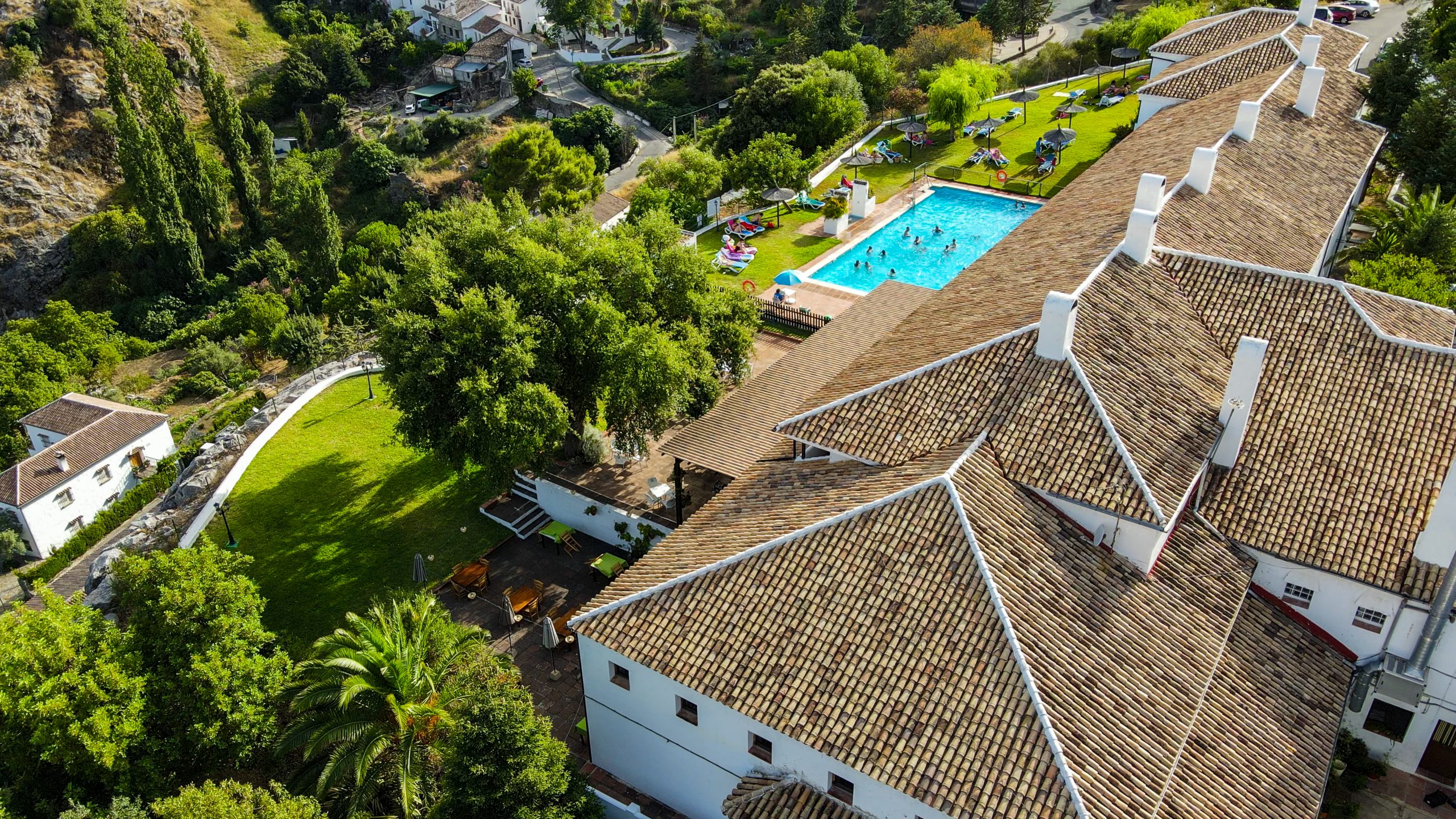

The Hotel Villa Turística de Grazalema sits on a hillside just outside the village, with the valley in front of it and traditional mountain architecture —stone, tile and wood— but with the services of a full hotel.
- Pets welcome.
- 5 minutes from the historic centre and a step away from the start of the Pinsapar trail.
- Rooms and apartments with terraces overlooking the valley, a good option for families.
- El Olivar restaurant, serving mountain cooking, so you don’t have to go down to the village after a hike.
- Pool and fireplace: summer and winter sorted.
- Help with permits for the park’s restricted trails.