The best hiking routes in Almería: a complete guide for all levels
Here is an essential selection of hiking routes in Almería, explained in a down-to-earth way: what the terrain is like, how long they take, who they’re suitable for… Make yourself comfortable!
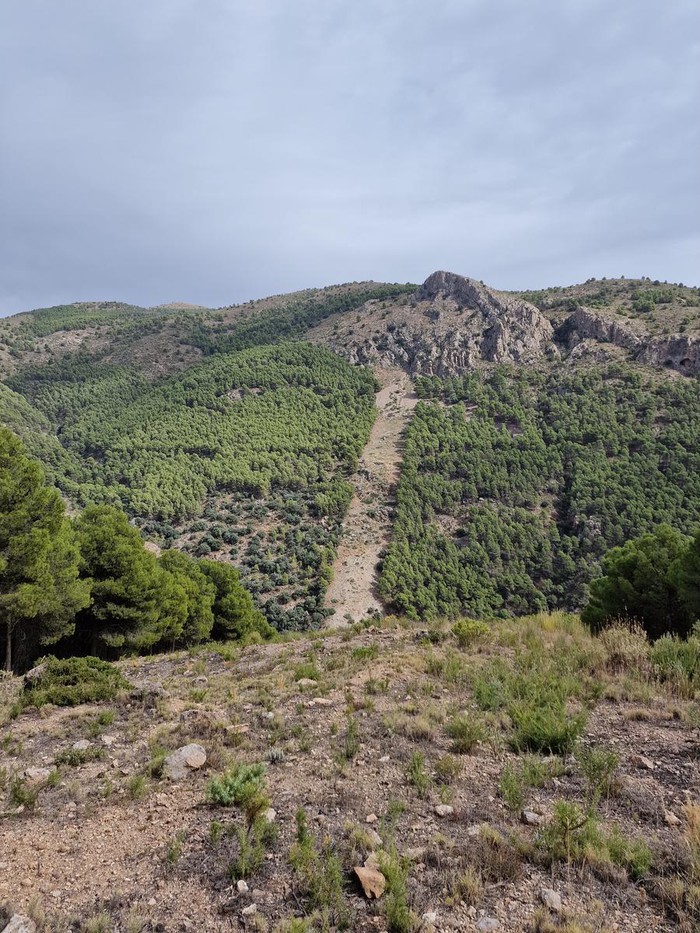
Almería is one of those provinces that shifts your mindset the moment you start walking. It’s a place that surprises you at every step. In just a few kilometres, you can go from riverside woodland with historic irrigation channels to high-mountain scenery in the Sierra Nevada, cross wild ravines, wander through the white villages of La Alpujarra, or walk through near-desert landscapes that are unique in Europe.
Here’s an essential selection of hiking routes in Almería, explained in a down-to-earth way: what the terrain is like, how long it takes, who each route is for, and what you’ll want to know before you set off. Get comfortable — we’re off.
Best hiking routes in Almería (that you might not know about)
Hydroelectric Power Station Trail
If there’s one route that’s earned its “must-do” status in Almería’s Alpujarra, it’s the Hydroelectric Power Station Trail (PR-A 36). Circular, varied and full of character, it blends industrial history, lush nature and a little touch of adventure — all very accessible. It’s no surprise it’s one of Almería’s most popular and most photogenic hikes.
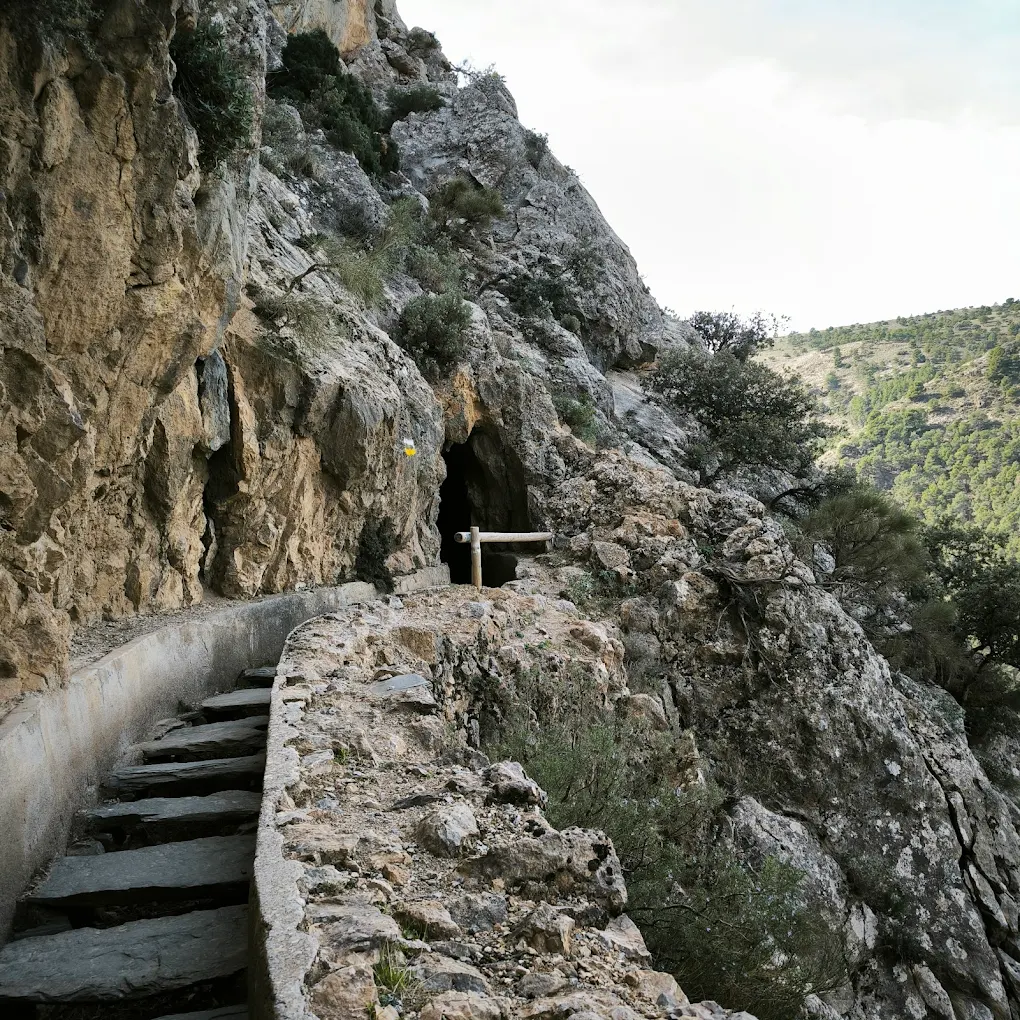
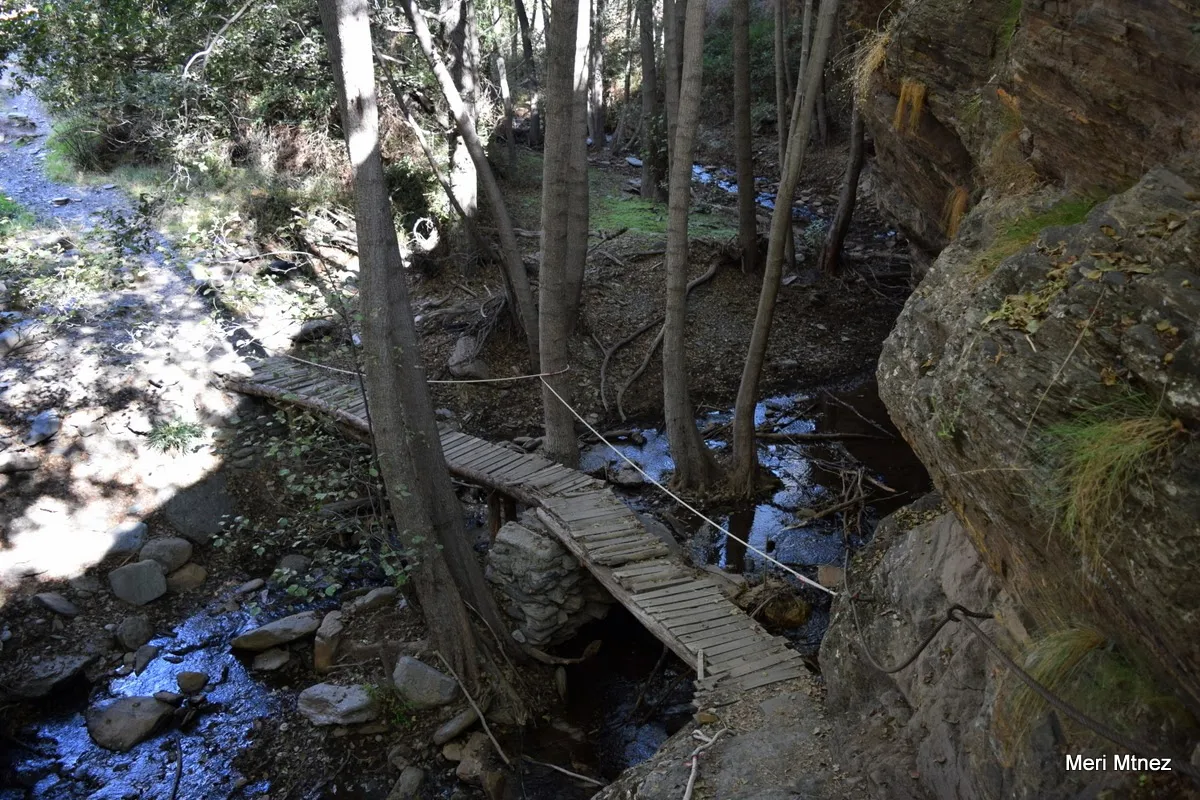
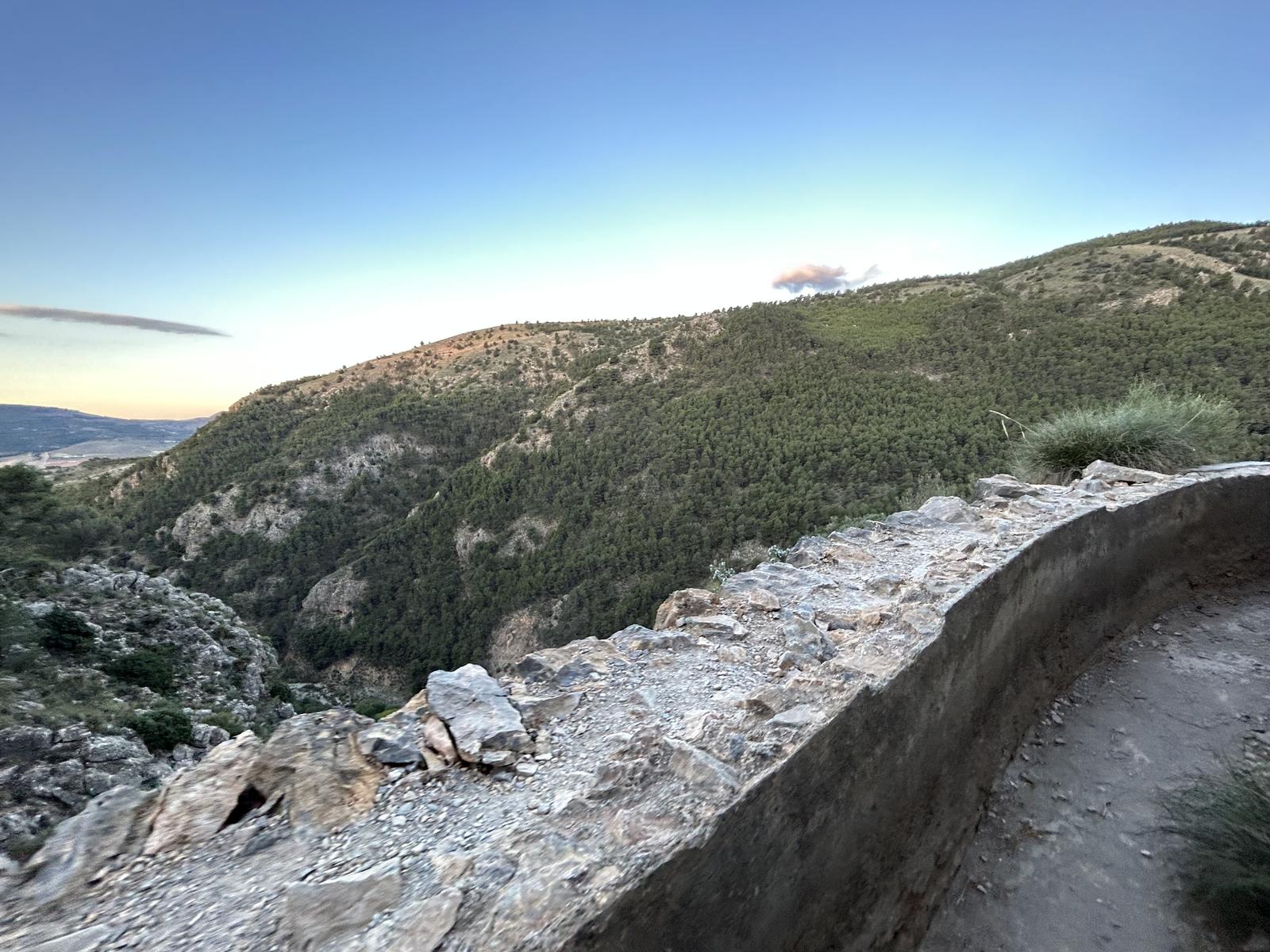
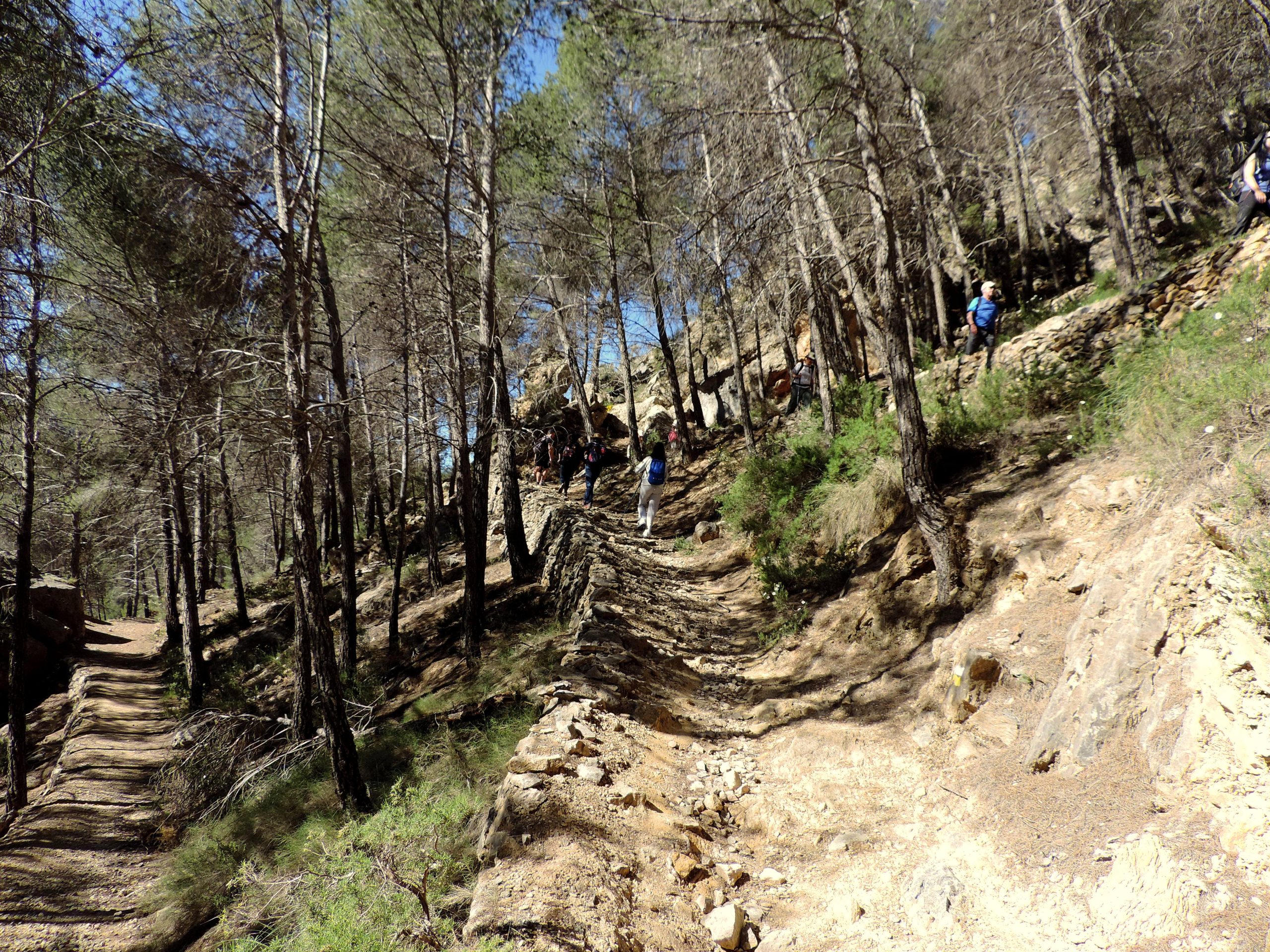
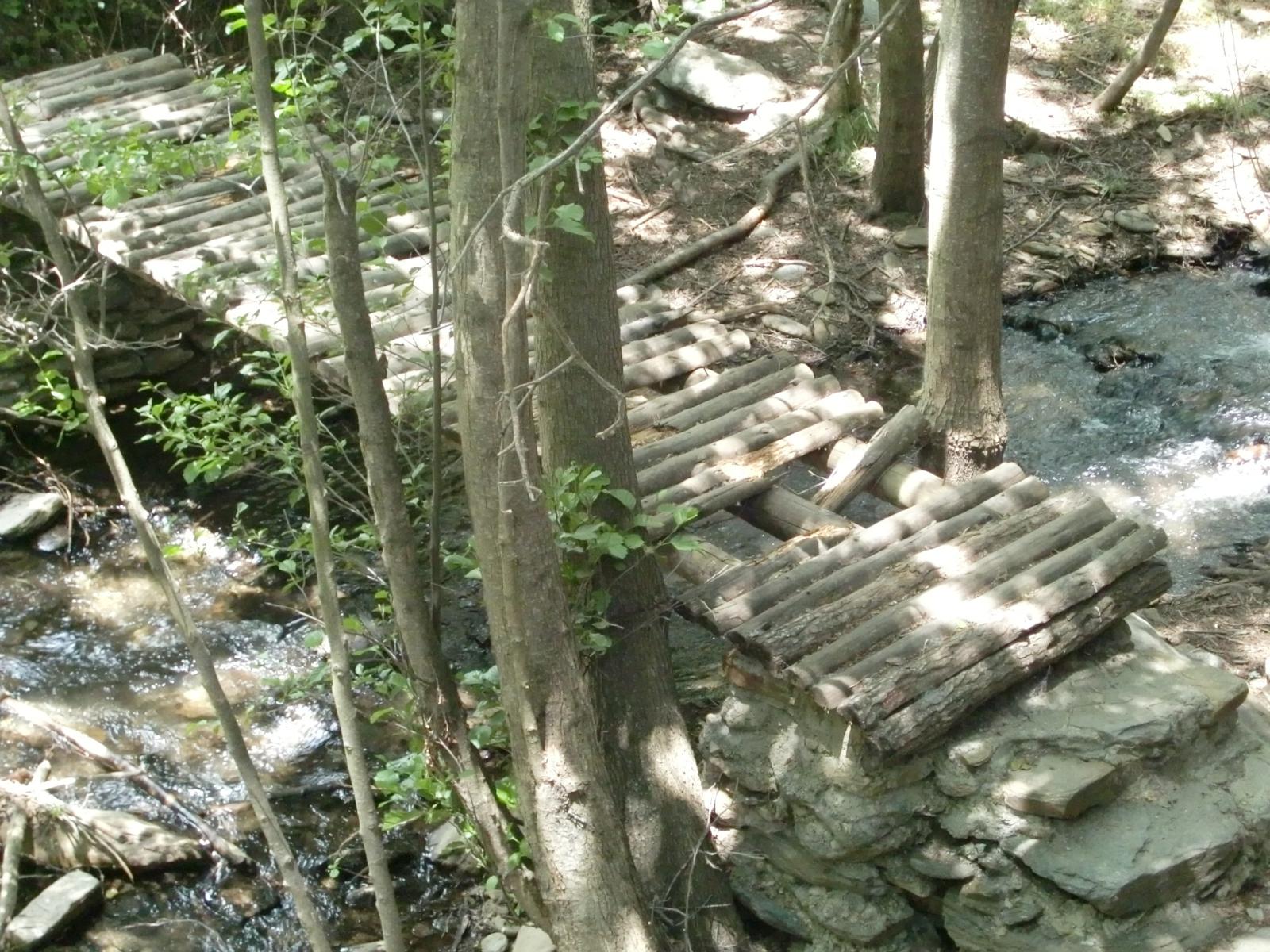
Here you’ll walk alongside an old 20th-century hydroelectric canal, head through tunnels carved into the rock, and cross the famous Puente del Chillo, suspended above the Andarax Gorge. All of it is wrapped in riverside woodland, where poplars, ash trees and pines offer cool shade even in summer. The constant flow from the source of the Andarax turns the area into a true green oasis — a striking contrast to the more arid image many people have of the south.
Hydroelectric Tunnel and Puente del Chillo
The tunnels — between 20 and 50 metres long — are pitch-dark inside. A torch or your phone’s light is essential. It’s a short crossing, but with that little thrill of adventure that really hooks you.
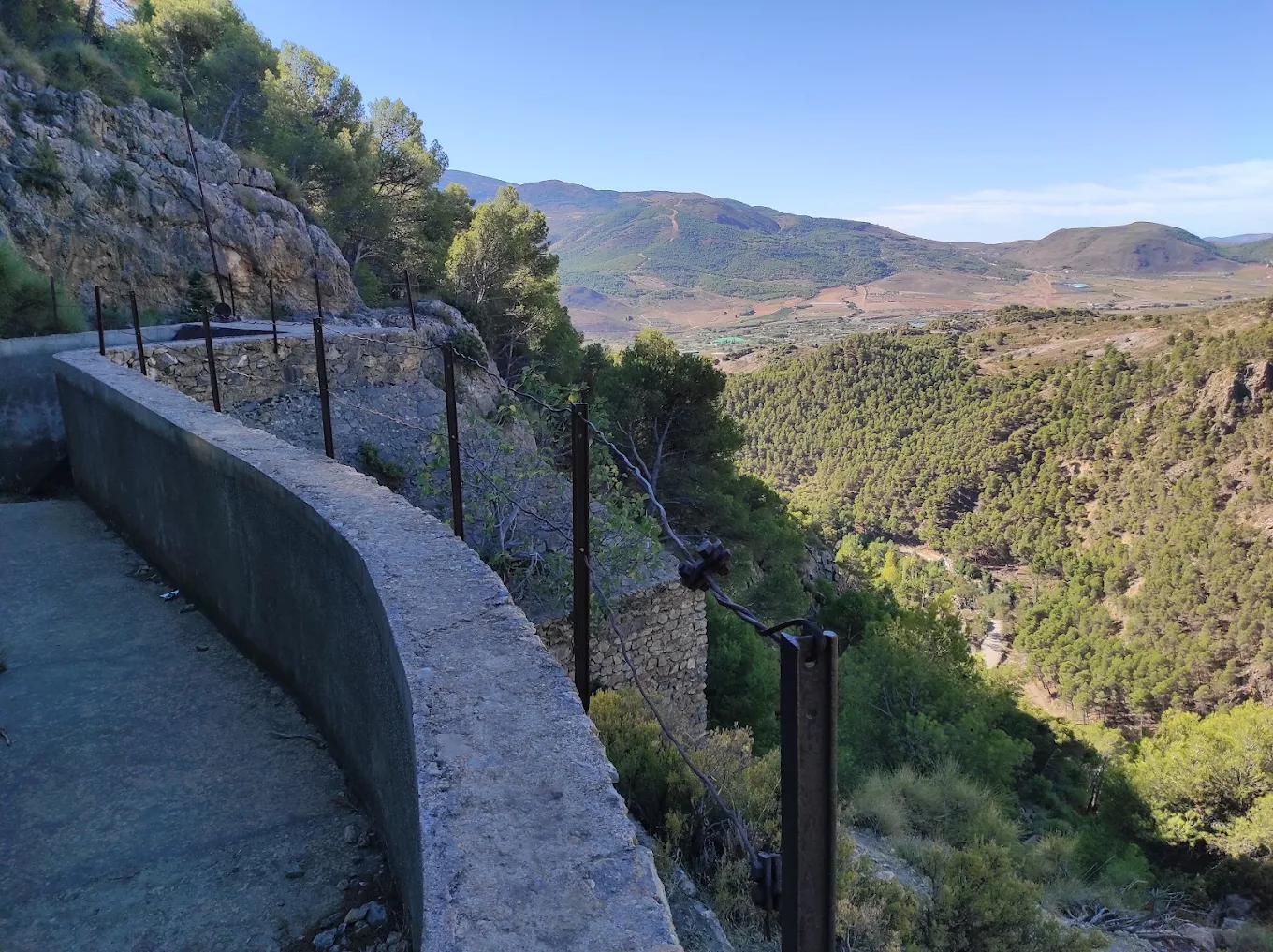
El Puente del Chillo It’s the route’s icon: a century-old aqueduct, wide-open views over the valley, and the go-to spot for photos. It can feel a bit daunting if you’re wary of heights, but the railings make it feel secure.
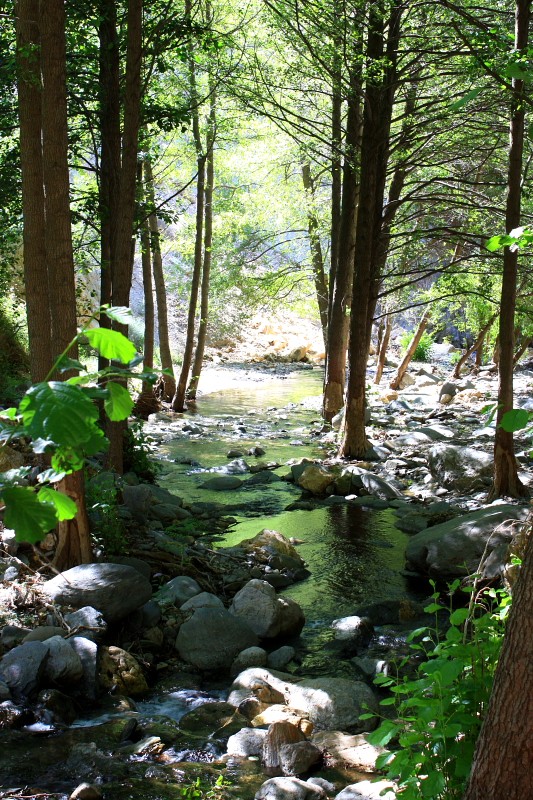
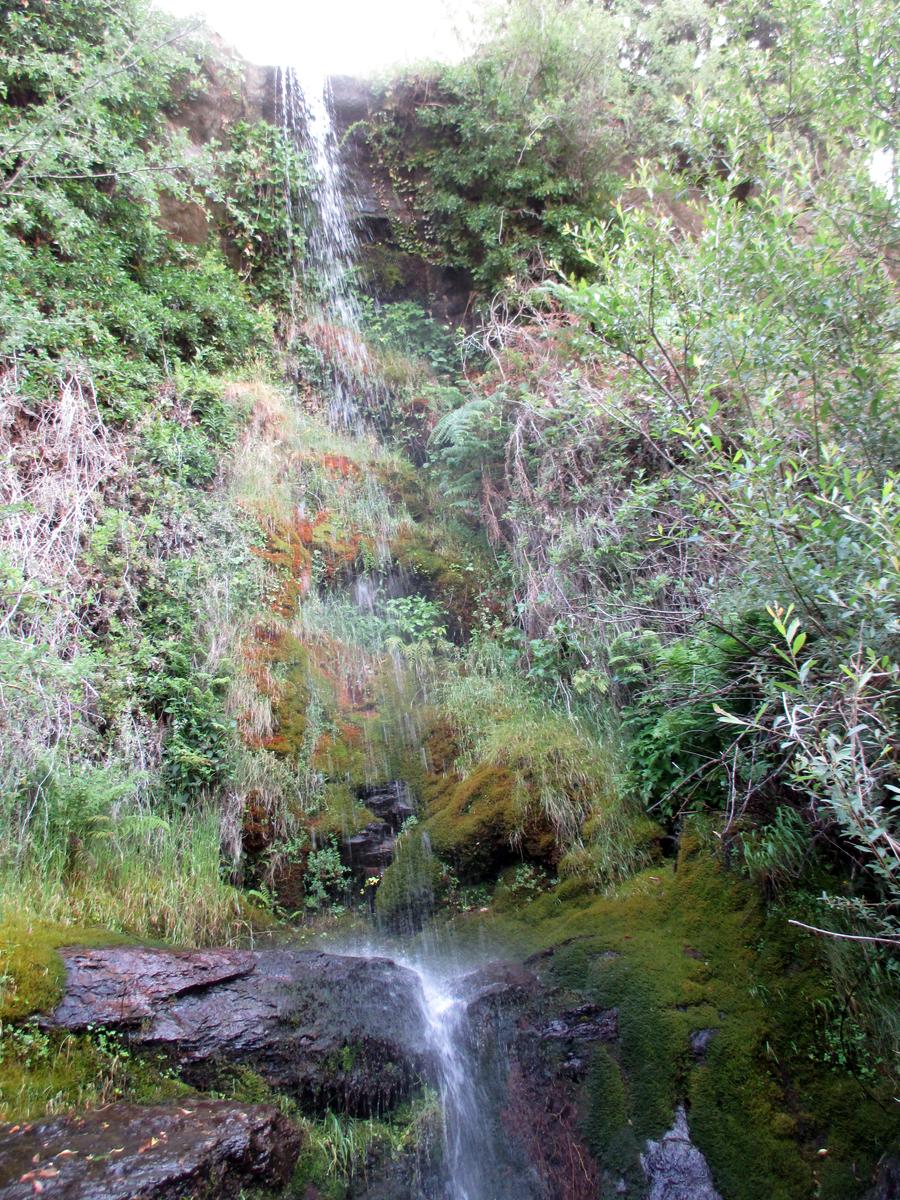
Then comes the most magical section: the descent alongside the historic canal, with the sound of running water as your soundtrack. In spring, little waterfalls appear between the rocks; in autumn, the poplars turn a deep gold. The light is genuinely enchanting.
Specifications
Distance: 9.5 km
Duration: 3-4 horas
Total ascent: 350 metres
Altitude: Between 1,000 and 1,350 metres
Difficulty: Moderate (because of the distance, not technical difficulty)
Start point: Nacimiento del Andarax Recreational Area, Láujar de Andarax
Route type: Circular
Waymarking: White and yellow blazes (official PR trail). Generally well signposted, though a few sections can be confusing; it’s advisable to have an offline GPS track downloaded.
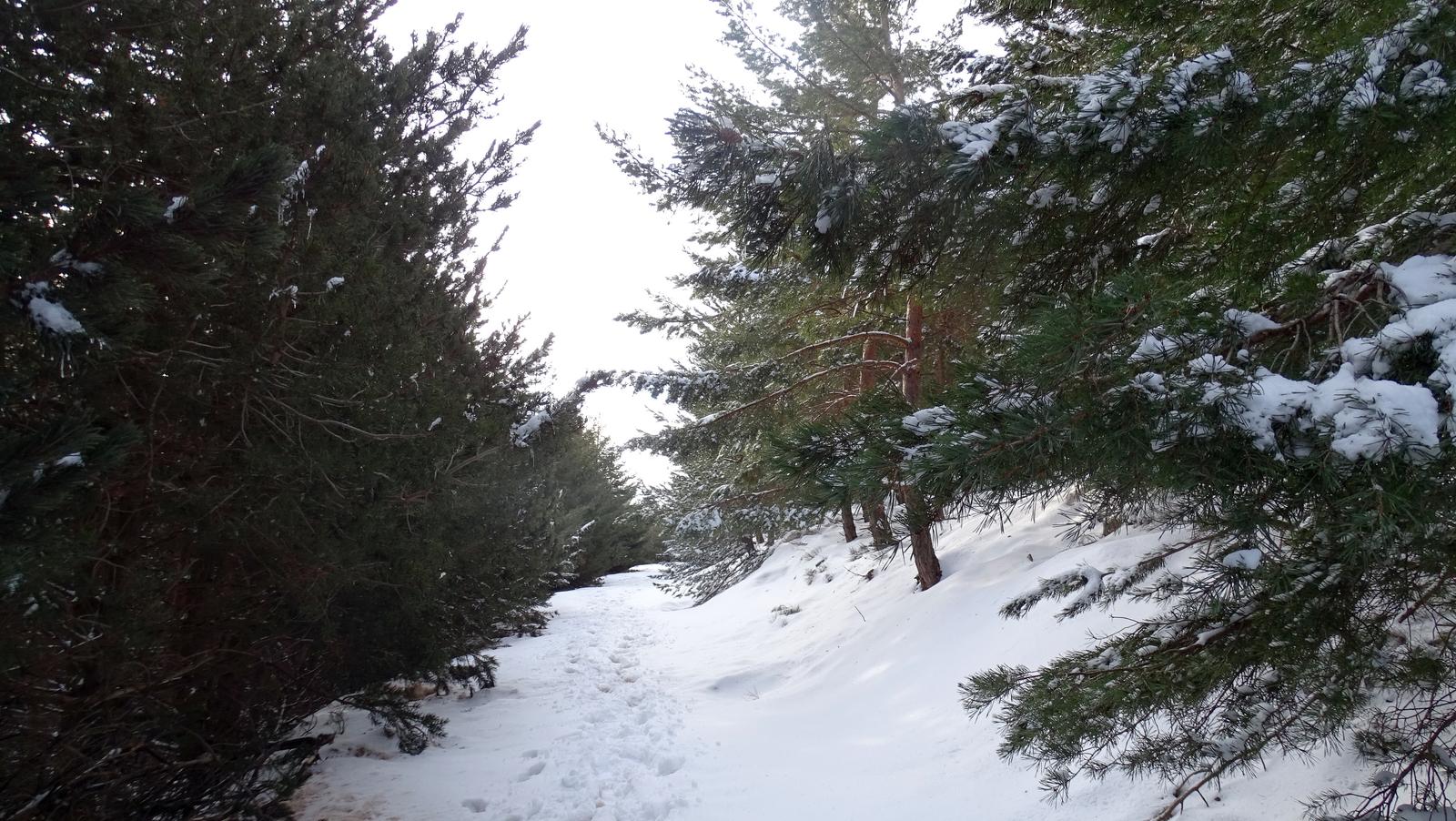
Best time to go: Spring and autumn. In summer it can get very hot on exposed, shade-free sections. In winter it’s doable as long as there’s no snow.
What to bring: hiking boots, at least 2 litres of water, energy snacks, walking poles, sun protection and a GPS track.
Río Andarax’s Route
Fancy something easy-going, no steep climbs, perfect for a chat without watching the clock? This is your route. It’s almost flat and, in places, even suitable for pushchairs. It runs alongside the river from Láujar de Andarax, with plenty of shade and an ideal pace for switching off.
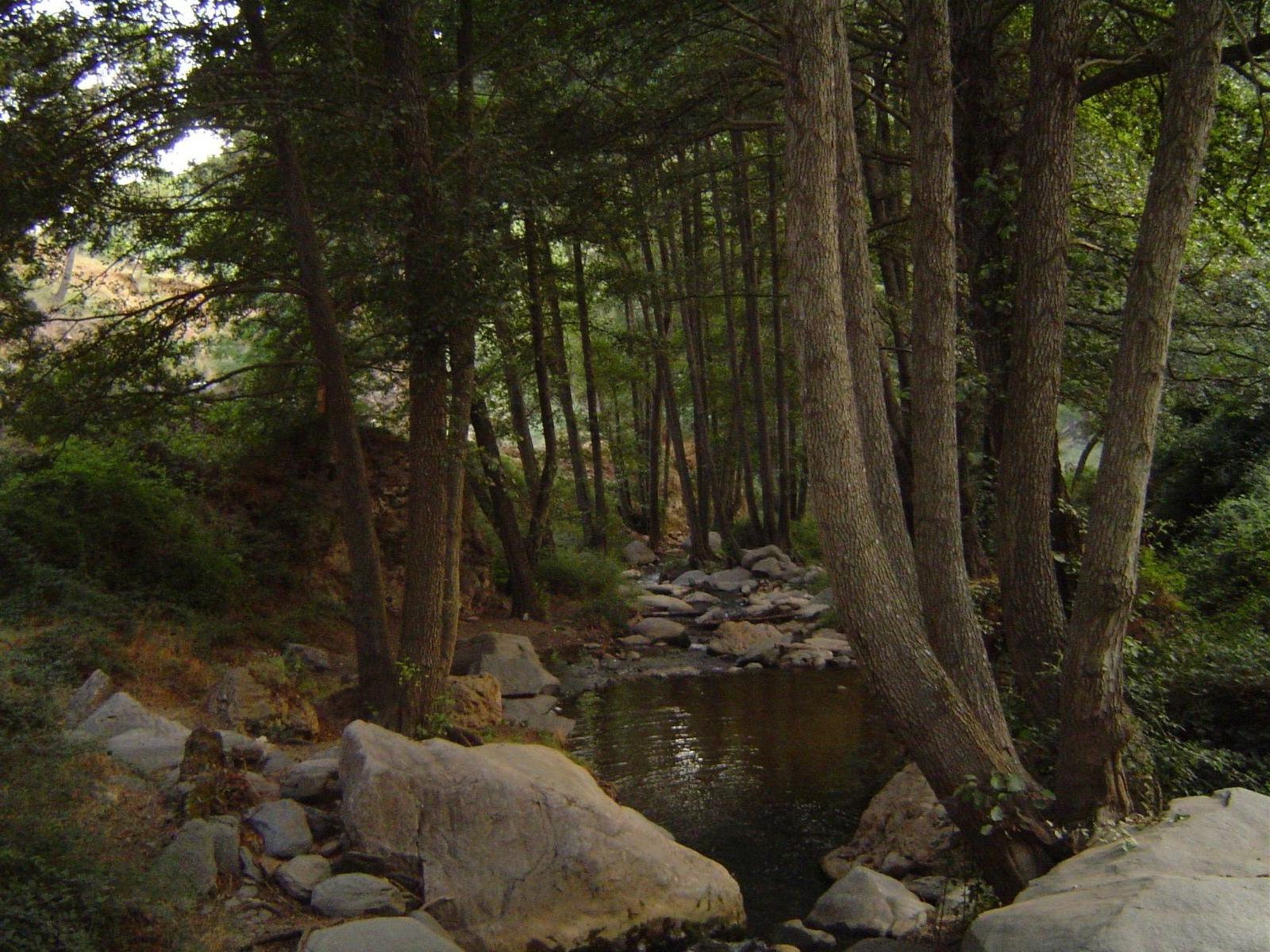
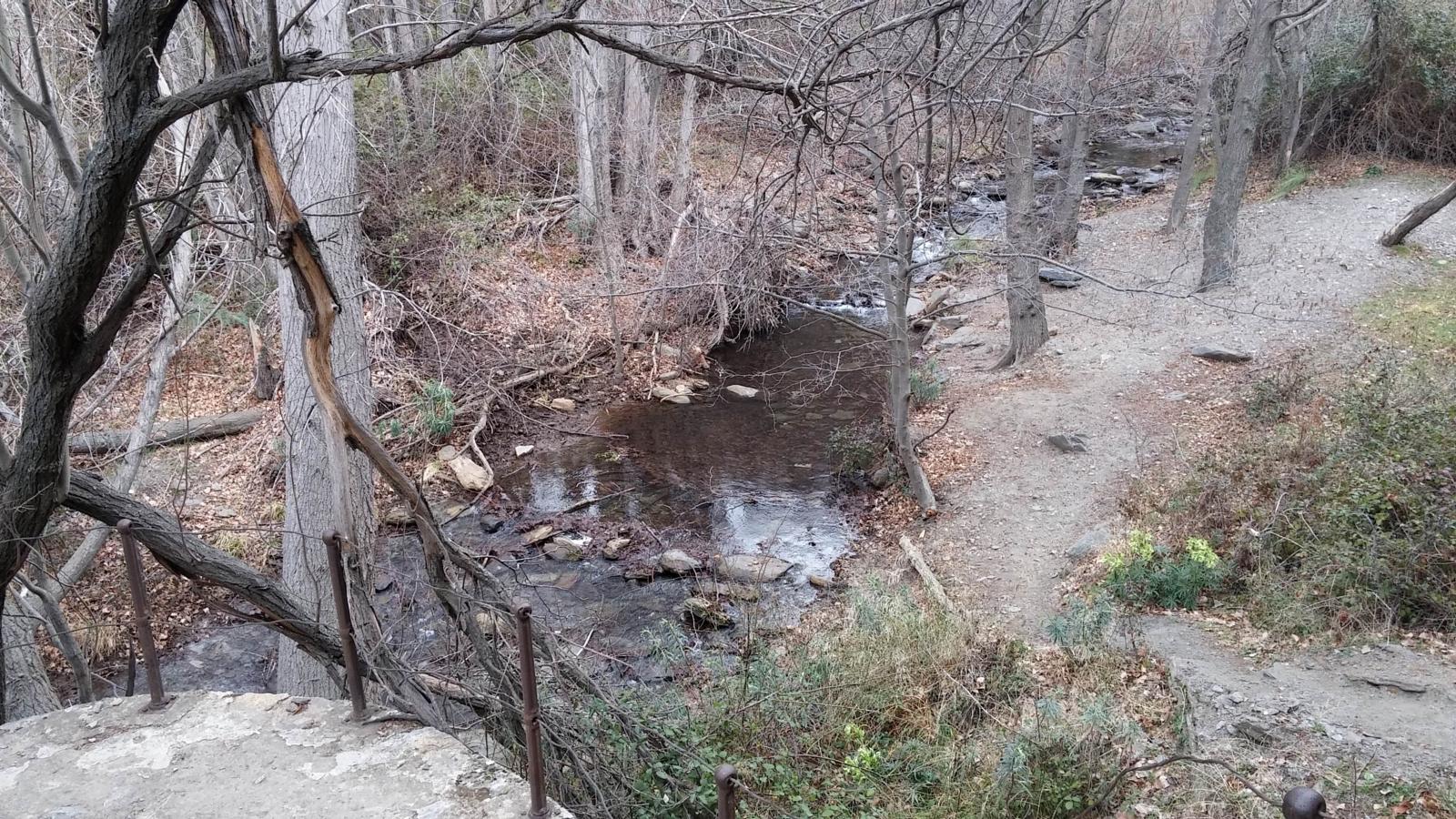
It alternates between wide tracks and riverside paths, always with the soft murmur of water in the background. In spring the almond trees bloom; in autumn, the poplars turn everything gold. You’ll want to stop every few steps
The riverside vegetation creates a cool microclimate even in summer. It’s easy to spot blackbirds, wagtails and, if you’re lucky, a kingfisher. There are pools where children can paddle — the water is cold, yes, but you’ll be glad of it.
Specifications
Distance: 5–8 km (out and back, depending on how far you go)
Duration: 1.5–2.5 hours
Total ascent: Minimal (<50 metres)
Difficulty: Very Easy
Start point: Láujar de Andarax (several access points from the village)
Route type: Linear (out and back)
How to arrive: From the centre of Láujar, follow the signs towards the river. There are several access points; the most popular is near the village bridge. Parking is on the village streets (free).
Best time to go: All year round, although spring and autumn are ideal for both temperatures and scenery. In summer, it’s best to set off early.
What to bring: comfortable trainers, water, a swimsuit if it’s warm, basic sun protection and a few snacks.
Monterrey Trail
The Monterrey Trail (PR-A 35) is a long circular walk with no major technical difficulties. Expect Aleppo pine and holm oak woodland, constant views over La Alpujarra, and old mule tracks. Ideal for a full day out without getting yourself into trouble.
You’ll cross working irrigation channels, centuries-old threshing floors and stone farmsteads. It’s not unusual to spot Spanish ibex or birds of prey gliding overhead. Out here, silence is the rule — broken only by birdsong and wind whispering through the pines.
Specifications
Distance: 9.5 km
Duration: 3-4 hours
Total ascent: 350 metres
Altitude: Between 1,000 and 1,350 metres
Difficulty: Moderate (because of the distance, not technical difficulty)
Start point: Nacimiento del Andarax Recreational Area, Láujar de Andarax
Type of route: Circular
Waymarking: White and yellow blazes (official PR trail). Generally well signposted, though a few sections can be confusing — it’s advisable to have an offline GPS track downloaded.
Best time to go: Spring and autumn. In summer it can get very hot on exposed, shade-free sections. In winter it’s doable as long as there’s no snow.
What to bring: hiking boots, at least 2 litres of water, energy snacks, walking poles, sun protection and a GPS track.
Pico del Chullo
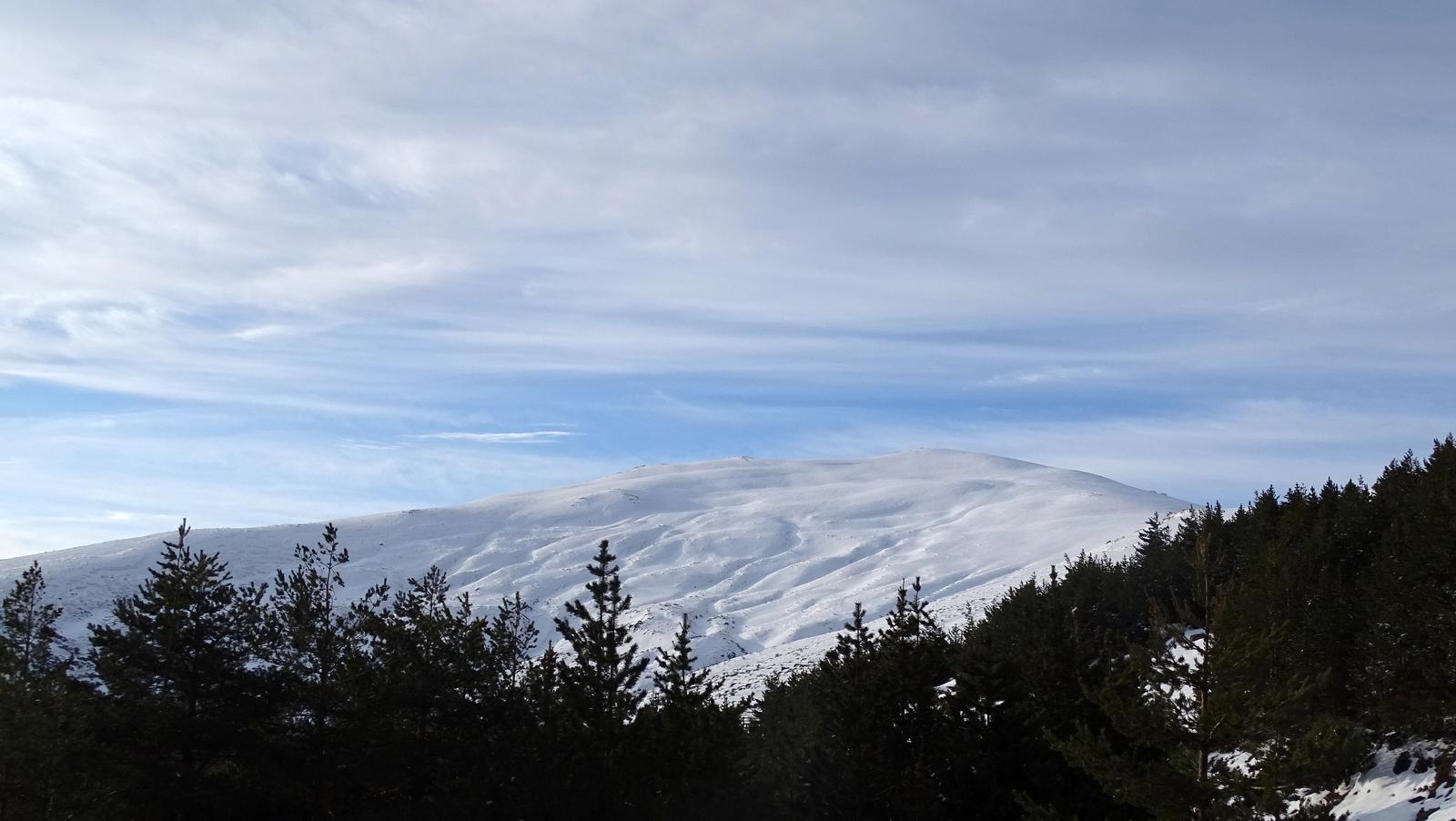
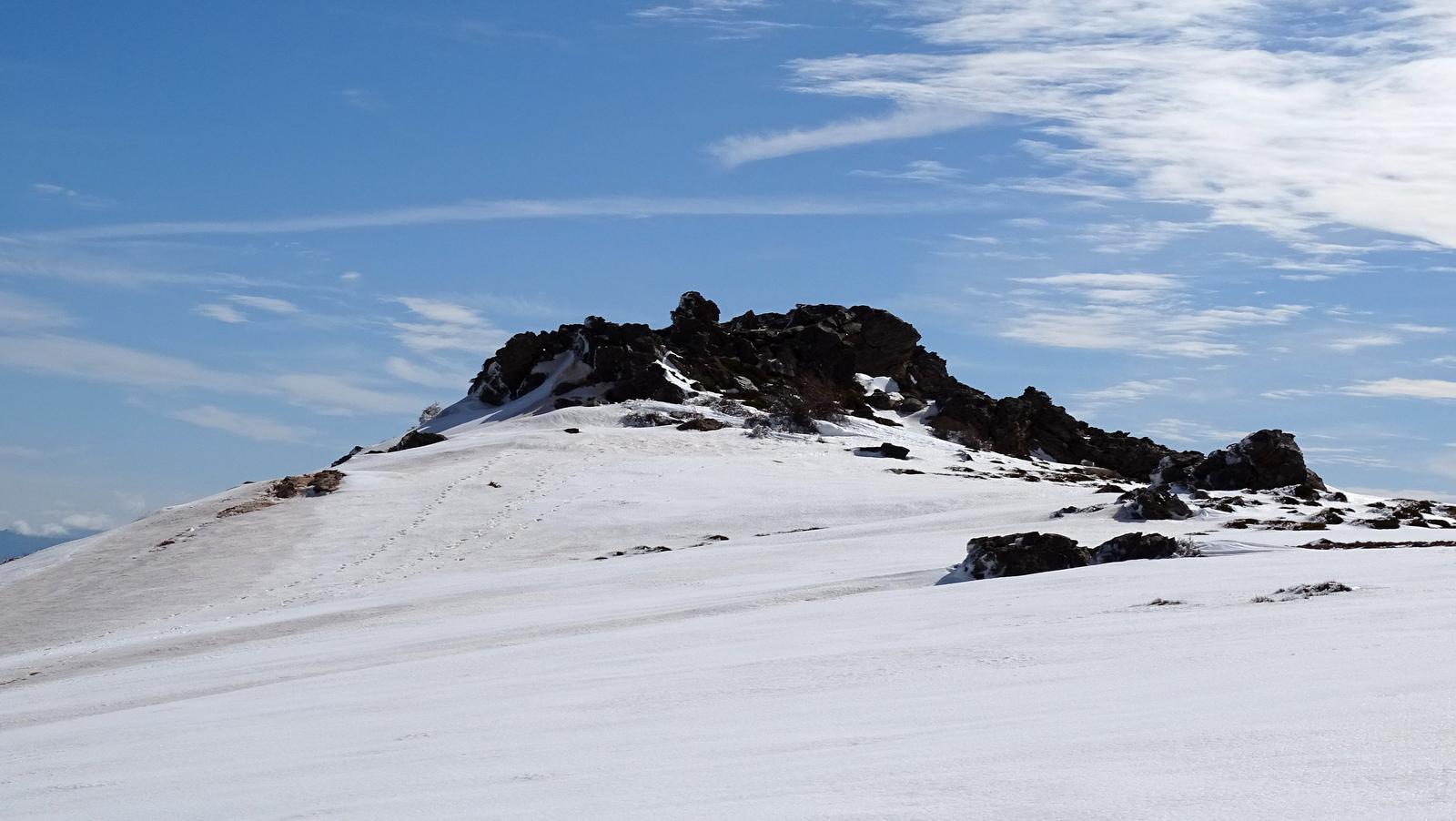
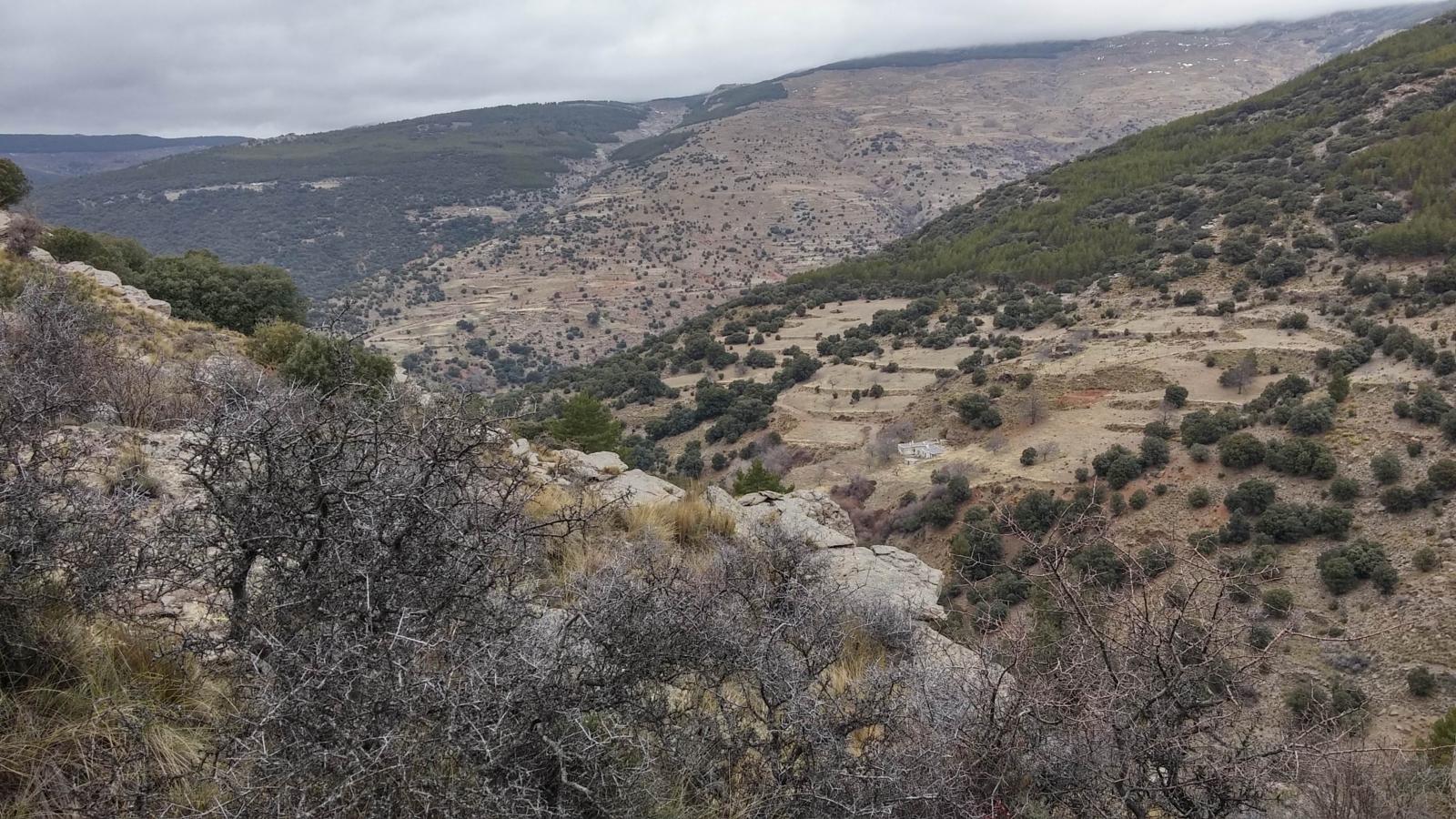
For those looking for a serious high-mountain challenge, El Pico del Chullo, at 2,611 metres, is one of the most demanding yet most rewarding hiking routes in Almería. From the summit, the views are unforgettable: the Mediterranean Sea to the south, the Sierra Nevada to the north, the Alpujarra at your feet and, on very clear days, even the African coast.
The ascent is long and tough, with more than 1,200 metres of cumulative elevation gain. There are no technical climbing sections, but it does require very good fitness, prior mountain experience and confidence navigating high-mountain terrain where waymarking is scarce.
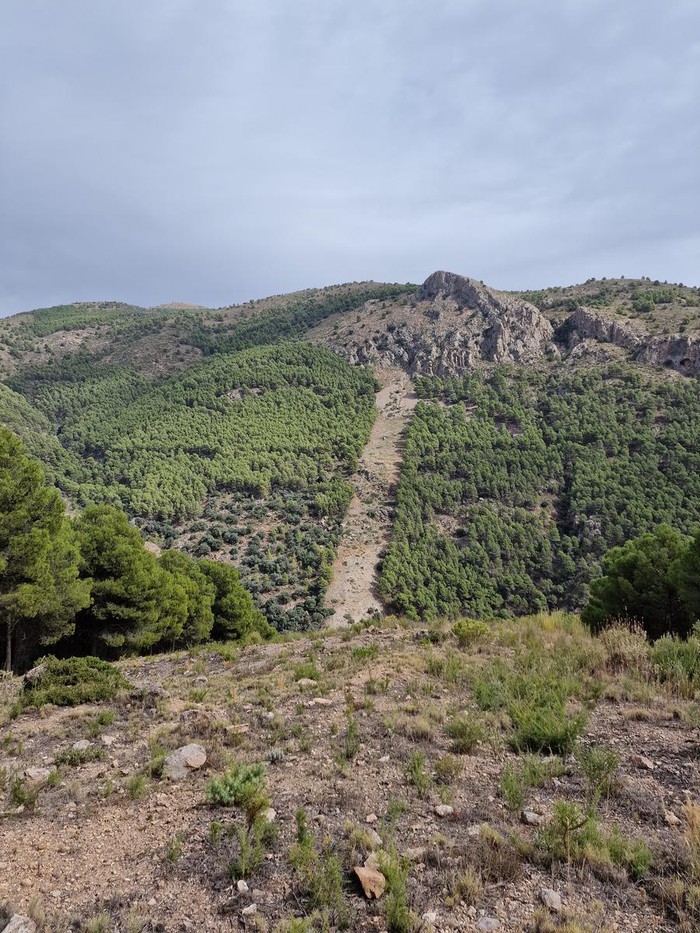
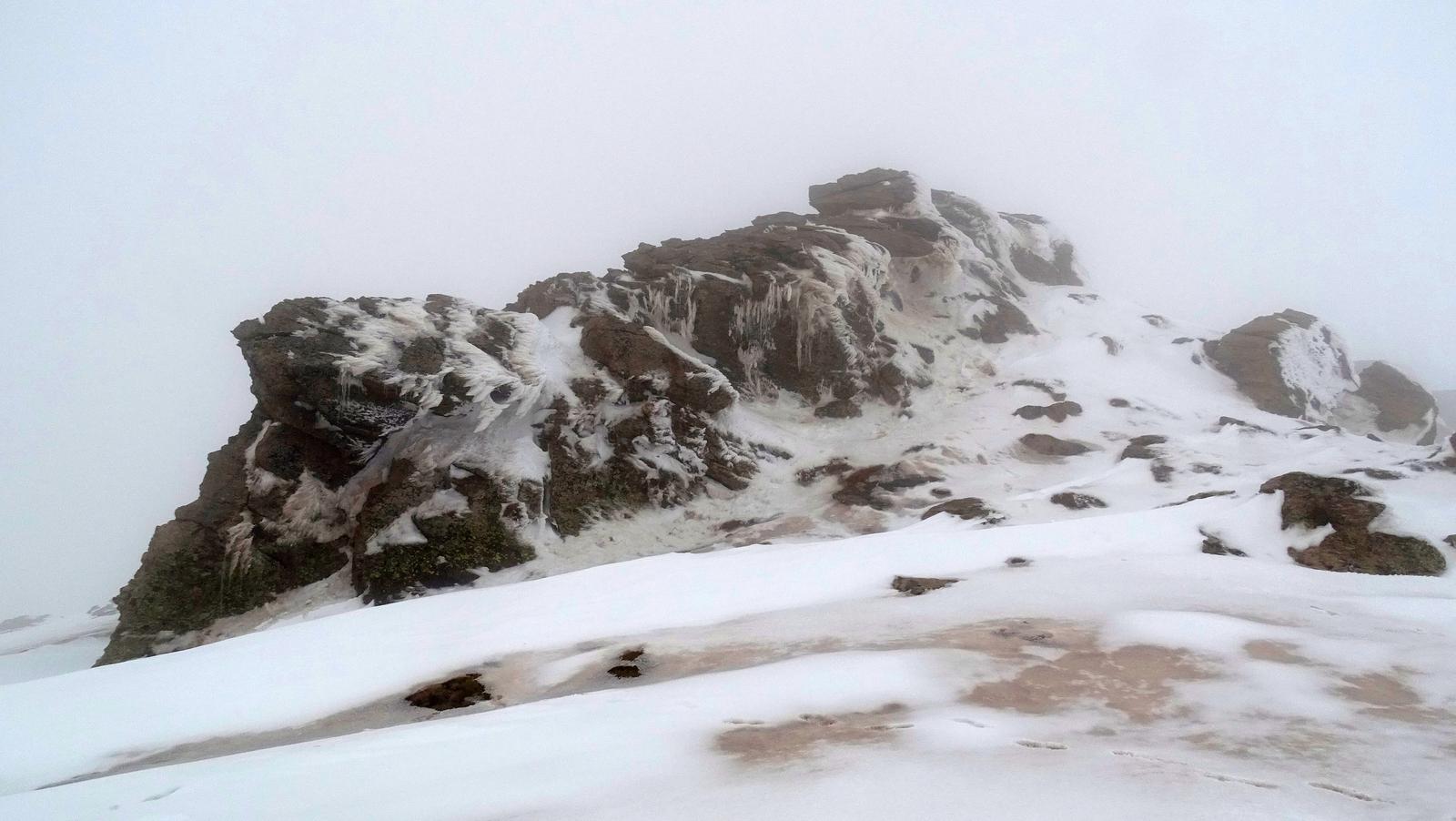
The route crosses pine and oak woods, broom scrub and, higher up, an almost lunar landscape of scree slopes and rocks smoothed by ice.
Specifications
Distance: 14-16 km (out and back)
Duration: 6–8 hours (ascent, summit and return)
Total elevation gain: 1,200 metres ascent
Summit altitude: 2,611 metres
Difficulty: High
Start: Cáñar or the La Tizná mountain refuge (4×4 vehicle access up to a higher altitude reduces the distance)
Type of route: Out and back
Best time: June to October (outside the snow season). In July and August, set off before dawn to avoid the typical summer afternoon storms in high mountain areas.
What to bring: full mountain kit—stiff boots, trekking poles, at least 3 litres of water, plenty of food, warm layers, high-factor sun protection, category 3–4 sunglasses, an emergency thermal blanket, a first-aid kit, GPS, a headtorch and a fully charged mobile phone.
El Aguadero
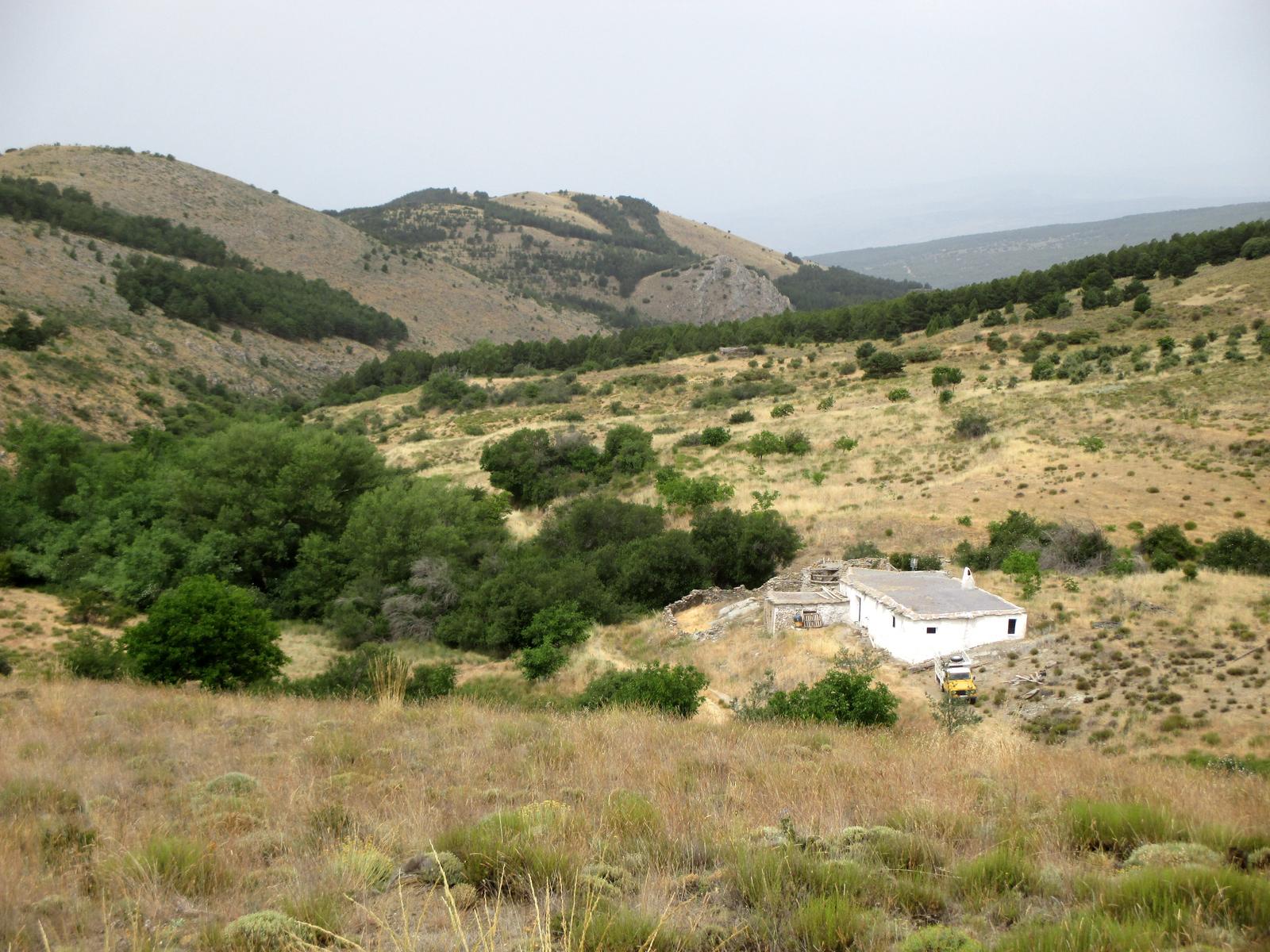
El Aguadero is a demanding circular route, but the kind you enjoy from start to finish. It takes you through the Upper Alpujarra of Almería, linking ancient chestnut woods, white villages clinging to the mountainside and spectacular views of the Sierra Nevada. One of the most well-rounded routes in Almería if you’re after nature, traditional culture and a solid physical challenge.
The itinerary passes through some of the most representative landscapes of the Alpujarra and natural viewpoints from which, on clear days, you can even catch a glimpse of the Mediterranean.
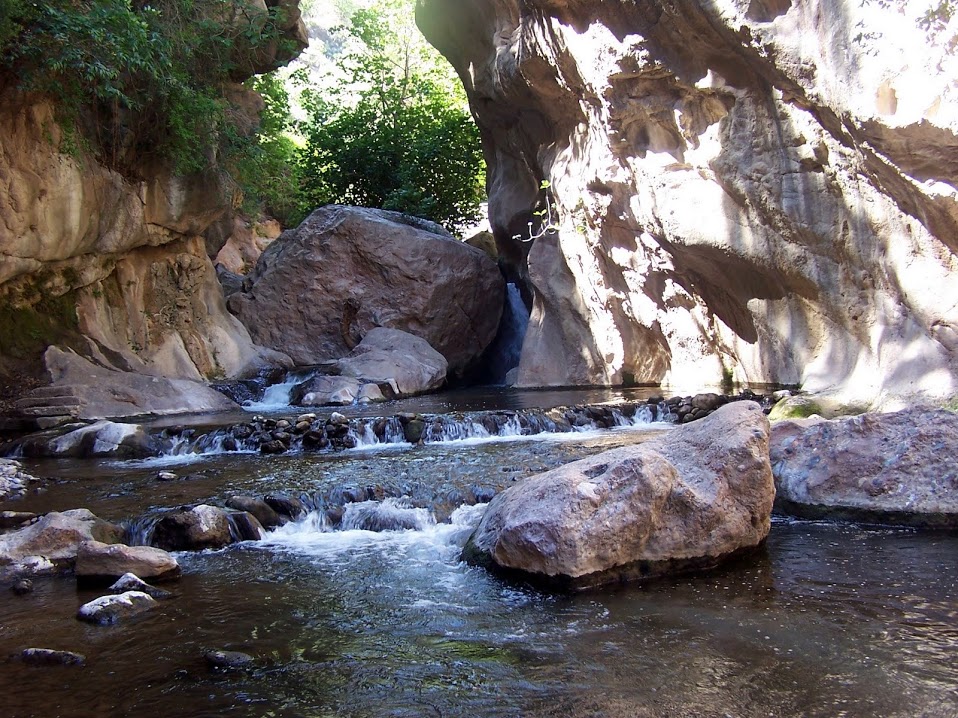
La Majada de Vacas, halfway along, has a drinking-water fountain, picnic tables and shade—perfect for regaining your strength. The Aguadero ravine is particularly beautiful, with lush vegetation and crystal-clear pools.
Specifications
Distance: 16 km
Duration: 5-6 hours
Total elevation gain: 650 metres ascent
Altitude: between 1,100 and 1,550 metres
Difficulty: Moderate to high (due to the distance and cumulative elevation gain)
Start: Bayárcal
Route type: Circular
Best time: Spring (April–May) to see the chestnut trees in bloom and waterfalls with plenty of water. Autumn (October–November) for the chestnuts’ spectacular colours. Avoid summer because of the heat on exposed sections.
What to bring: sturdy boots, at least 2.5 litres of water, food, trekking poles, sun protection, a warm layer and a GPS.
Alternative route from the La Murilla reservoir dam
There’s a variant that starts from the La Murilla reservoir dam, which slightly reduces the total distance to 14 km while keeping the main highlights of the route. It’s a good option if you want to shorten the day a bit without missing the best of the scenery.
Key differences:
Distance: 14 km (vs 16 km from Bayárcal)
It starts at a higher elevation, reducing the initial ascent.
You miss the section through Bayárcal (pretty, but dispensable if you prioritise nature over culture).
You can drive to the dam (the last section is a dirt track in good condition).
How to get to the La Murilla dam?: From Bayárcal, follow the signs for “Presa de la Murilla”. The compacted dirt track is passable with a normal car (take extra care after heavy rain). Limited parking next to the dam.
Easy family-friendly routes in Almería
If you’re travelling with children or looking for accessible hiking routes in Almería without missing out on truly striking scenery, these options combine low technical difficulty, moderate duration and enough points of interest to keep everyone entertained.
Hydroelectric Power Station Trail
La Hidroeléctrica is the classic family route in Almería. The tunnels carved into the rock add just the right touch of adventure, the Puente del Chillo offers perfect family photo views, and the riverside woodland provides shade for almost the entire walk. The shorter version (4.2 km, 1.5–2 hours) is manageable for children from around 4–5 years old who are used to walking.
Why it works for families: constant variety, an adjustable distance, easy terrain, and a recreational area with play equipment and picnic spots.
Río Andarax’s Route
The most relaxed walk in the entire guide. Hardly any elevation gain, continuous shade, water close by and a completely flexible distance. Some sections even allow you to go with a baby buggy.
Why it works for families: zero technical difficulty, constant water and shade, a flexible distance, and wildlife that’s easy to spot.
Mountain routes in Almería for experienced hikers
If you’ve got mountain experience, good fitness and you enjoy challenges that leave a lasting impression, these hiking routes in Almería offer demanding elevation gains, wild landscapes and that satisfaction of finishing the day with a tired smile.
Monterrey Trail
Although it isn’t technically difficult, its 9.5 km and 350 metres of ascent demand stamina. Ideal for intermediate to advanced hikers who want a full day out without taking on the risks of high mountain terrain.
Highlights: solitude, sweeping views, mature woodland and a great workout.
Pico del Chullo
The ultimate summit. At 2,611 metres, El Pico del Chullo is a major challenge: 14–16 km, 1,200 metres of ascent and around 6–8 hours of effort. Only for very experienced hikers in excellent physical condition.
Why it’s special: 360° views, high-mountain flora, a real sense of achievement and wild fauna.
Essential requirements: prior high-mountain experience, strong navigation skills, full kit, and the ability to assess weather conditions.
Hiking routes in Almería to do with your dog
More and more people are hitting the trails with their four-legged companion. These hiking routes in Almería are particularly suitable for going with a dog, combining easy terrain, shade, water and the absence of tricky technical sections.
Routes to AVOID with dogs:
Pico del Chullo: too long, demanding and technical for most dogs.
Monterrey: the long distance without water can be tough for dogs
Hydroelectric Power Station Trail
Very popular with people hiking with dogs. The constant shade from the riverside woodland, nearby water and moderate distance make it ideal.
Considerations when hiking with dogs:
Lead required at all times.
In the tunnels, keep your dog under close control (they’re dark and some dogs can get spooked).
Narrow sections along the channel: large dogs may need the occasional bit of help.
Puente del Chillo: some dogs that are afraid of heights may freeze up; consider carrying them over this section if that’s the case.
Nearby water allows them to cool down.
Río Andarax’s Route
The BEST route for dogs in Almería. No ascent, constant water for drinking and paddling, continuous shade and easy ground. Perfect even for older dogs or those with reduced mobility.
Why it’s perfect for dogs:
Flat, easy terrain (virtually no risk of injury).
Natural pools where they can splash about freely.
Shade that helps prevent heatstroke.
Adjustable distance (you can shorten it if you see your dog getting tired).
No technical sections where you’d need to carry your dog.
Choose your hiking route in Almería
With so many hiking routes in Almería, choosing isn’t always easy. This comparison table makes it a bit simpler, based on your level, available time and plan.
Route
Distance
Duration
Difficulty
Best for
Ideal Time
Hidroeléctrica
4.2 to 9 km
1.5 to 3.5h
Easy/Moderate
Families, beginners, groups
Spring/Autumn
Río Andarax
5 to 8 km
1.5 to 2.5h
Very Easy
Kids, dogs and relax
All year round
Monterrey
9.5 km
3 to 4h
Moderate
Intermediate hikers
Spring/Autumn
Pico del Chullo
14-16 km
6 to 8h
High
Fit, experienced hikers
June–October (no snow)
El Aguadero
16 km
5 to 6h
Moderate/High
Advanced hikers
Spring/Autumn
Where to stay near the routes: Hotel Villa Turística de Laujar
For those planning several days exploring hiking routes in Almería, choosing the right base makes the difference between a logistically tricky getaway and a smooth, relaxed experience.
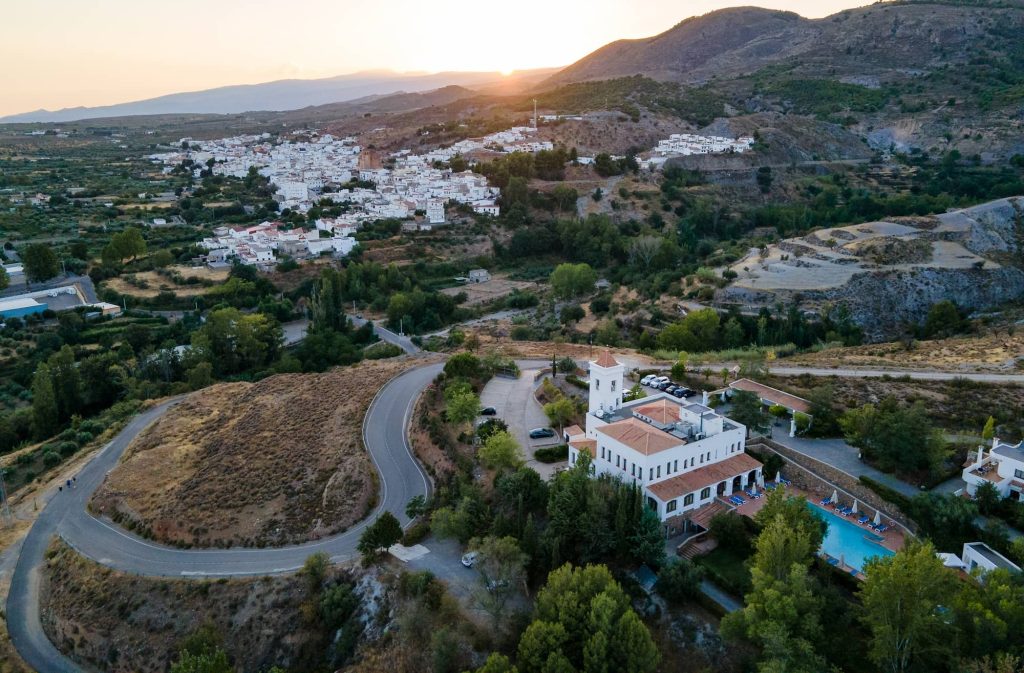
Strategic location: Set in Láujar de Andarax, it’s less than 10 minutes by car from the start of the most popular routes (La Hidroeléctrica, Monterrey, Río Andarax) and 30–45 minutes from other routes in the Alpujarra (El Aguadero, Tres Pueblos).
Frequently asked questions about hiking routes in Almería
What is the best time of year to go hiking in Almería?
Spring and autumn. In summer, only choose shaded routes and set off very early.
Can I bring my dog?
Yes, on a lead. The most recommended are the Río Andarax and La Hidroeléctrica. Avoid very demanding routes or going in summer.
Is there drinking water on the routes?
Only at a few points. Always carry more water than you think you’ll need.
Do I need a guide to do the routes?
It isn’t mandatory. The routes are signposted, but it’s essential to have the GPS track downloaded.
Is there mobile reception?
Limited or non-existent in many areas. Download maps and tracks offline.
Are the routes well waymarked?
PR routes are usually waymarked, but not always in good condition. A GPS is essential.
Is camping allowed?
Wild camping isn’t allowed. Use campsites or authorised areas.
Hotel Villa Turística de Laujar
Best hiking routes in Almería (that you might not know about)
Almería is one of those provinces that shifts your mindset the moment you start walking. It’s a place that surprises you at every step. In just a few kilometres, you can go from riverside woodland with historic irrigation channels to high-mountain scenery in the Sierra Nevada, cross wild ravines, wander through the white villages of La Alpujarra, or walk through near-desert landscapes that are unique in Europe.
Here’s an essential selection of hiking routes in Almería, explained in a down-to-earth way: what the terrain is like, how long it takes, who each route is for, and what you’ll want to know before you set off. Get comfortable — we’re off.
Hydroelectric Plant and Puente del Chillo Circular Trail
The route offers stunning views of the valley and the surrounding mountains.
Distance:
6,81 km
Route:
Circular
Duration:
5 hours
Elevation Gain:
505 m positive
Maximum Altitude
1.167 m
Difficulty
Moderate
If there’s one route that’s earned its “must-do” status in Almería’s Alpujarra, it’s the Hydroelectric Power Station Trail (PR-A 36). Circular, varied and full of character, it blends industrial history, lush nature and a little touch of adventure — all very accessible. It’s no surprise it’s one of Almería’s most popular and most photogenic hikes.
Here you’ll walk alongside an old 20th-century hydroelectric canal, head through tunnels carved into the rock, and cross the famous Puente del Chillo, suspended above the Andarax Gorge. All of it is wrapped in riverside woodland, where poplars, ash trees and pines offer cool shade even in summer. The constant flow from the source of the Andarax turns the area into a true green oasis — a striking contrast to the more arid image many people have of the south.
The tunnels — between 20 and 50 metres long — are pitch-dark inside. A torch or your phone’s light is essential. It’s a short crossing, but with that little thrill of adventure that really hooks you.
Puente del Chillo is the route’s icon. A century-old aqueduct, open views across the valley, and the go-to spot for photos. It can feel intimidating if you’re afraid of heights, but the railings provide reassurance.
Then comes the most magical section: the descent alongside the historic canal, with the sound of running water as your soundtrack. In spring, little waterfalls appear between the rocks; in autumn, the poplars turn a deep gold. The light is genuinely enchanting.
Waymarking: White and yellow blazes (official PR trail). Generally well signposted, though a few sections can be confusing; it’s advisable to have an offline GPS track downloaded.
Best time to go: Spring and autumn. In summer it can get very hot on exposed, shade-free sections. In winter it’s doable as long as there’s no snow.
What to bring: hiking boots, at least 2 litres of water, energy snacks, walking poles, sun protection and a GPS track.
Río Andarax’s Route
Fancy something relaxed, with no hills and perfect for chatting without watching the clock?
Distance:
5-8 km
Route:
Linear Out-and-Back Route
Duration:
1,5-2,5 hours
Elevation Gain:
142 m positives
Maximum Altitude
1.080 m
Difficulty
Very Easy
If you’re in the mood for an easy walk, this route is just the ticket. Virtually flat and even suitable for pushchairs in some sections, it runs alongside the river from Láujar de Andarax, with plenty of shade and a pace that’s perfect for switching off.
It alternates between wide tracks and paths along the riverbed, always with the murmur of the water in the background. In spring, the almond trees blossom; in autumn, the poplars turn everything golden. It makes you want to stop every couple of steps.
The riverside vegetation creates a cool microclimate even in summer. It’s easy to spot blackbirds, wagtails and, if you’re lucky, a kingfisher. There are pools where children can paddle — the water is cold, yes, but you’ll be glad of it.
How to get there: From the centre of Láujar, follow the signs towards the river. There are several access points; the most popular is near the village bridge. Parking is available on village streets (free).
Best time: year-round, though spring and autumn are ideal for the temperature and scenery. In summer, it’s best to set off early.
What to bring: comfortable trainers, water, a swimsuit if it’s hot, basic sun protection and snacks.
Monterrey Trail
Among ravines and centuries-old chestnut trees in the heart of La Alpujarra.
Distance:
9-10 km
Route:
Circular
Duration:
4-5 hours
Elevation Gain:
406 m positives
Maximum Altitude
1.270 m
Difficulty
Easy
The Monterrey Trail (PR-A 35) is a long circular walk with no major technical difficulties. Expect Aleppo pine and holm oak woodland, constant views over La Alpujarra, and old mule tracks. Ideal for a full day out without getting yourself into trouble.
You’ll cross working irrigation channels, centuries-old threshing floors and stone farmsteads. It’s not unusual to spot Spanish ibex or birds of prey gliding overhead. Out here, silence is the rule — broken only by birdsong and wind whispering through the pines.
Waymarking: White and yellow blazes (official PR trail). Generally well signposted, though a few sections can be confusing; it’s advisable to have an offline GPS track downloaded.
Best time to go: Spring and autumn. In summer it can get very hot on exposed, shade-free sections. In winter it’s doable as long as there’s no snow.
What to bring: hiking boots, at least 2 litres of water, energy snacks, walking poles, sun protection and a GPS track.
Pico del Chullo
Ascent to Almería’s highest peak with panoramic views of the Sierra Nevada.
Distance:
14-16 km
Route:
Circular
Duration:
6-8 hours
Elevation Gain:
693 m positives
Maximum Altitude
2.610 m
Difficulty
Difficult
For those seeking a serious high-mountain challenge, Pico del Chullo, at 2,610 metres, is one of Almería’s most demanding yet rewarding hiking routes. From the summit, the views are unforgettable: the Mediterranean Sea to the south, the Sierra Nevada to the north, La Alpujarra at your feet, and on very clear days, even the African coast.
The ascent is long, with over 650 metres of cumulative elevation gain. There are no technical climbing sections, but it does require very good physical fitness, prior mountain experience, and confidence in navigating high-mountain terrain where signage is limited.
The route crosses pine and oak woods, broom scrub and, higher up, an almost lunar landscape of scree slopes and rocks smoothed by ice.
Getting There: The route starts at the Puerto de la Ragua recreational area, which can be reached from Láujar de Andarax by taking the A‑348 towards Paterna del Río and then joining the A‑337, which climbs through Bayárcal up to the pass itself.
Best time: June to October (outside the snow season). In July and August, set off before dawn to avoid the typical summer afternoon storms in high mountain areas.
What to bring: full mountain kit—stiff boots, trekking poles, at least 3 litres of water, plenty of food, warm layers, high-factor sun protection, category 3–4 sunglasses, an emergency thermal blanket, a first-aid kit, GPS, a headtorch and a fully charged mobile phone.
Barranco del Aguadero
Mountain Biking Route / Mountain Bike
Distance:
34,16 km
Route:
Circular
Duration:
5–6 hours (by bike)
Elevation Gain:
1.137 m positives
Maximum Altitude
1.822 m
Difficulty
Moderate
El Aguadero is a challenging circular route, but one of those that can be enjoyed from start to finish. You can do it on a mountain bike or on foot, though the route varies slightly depending on your choice. You’ll travel through the high Alpujarra of Almería, linking centuries-old chestnut forests, whitewashed villages clinging to the mountainside, and spectacular views of the Sierra Nevada. One of Almería’s most well-rounded routes if you’re looking for nature, traditional culture, and a good physical challenge.
The itinerary passes through some of the most representative landscapes of the Alpujarra and natural viewpoints from which, on clear days, you can even catch a glimpse of the Mediterranean.
La Majada de Vacas, halfway along, has a drinking-water fountain, picnic tables and shade—perfect for regaining your strength. The Aguadero ravine is particularly beautiful, with lush vegetation and crystal-clear pools.
Best time: Spring (April–May) to see the chestnut trees in bloom and waterfalls with plenty of water. Autumn (October–November) for the chestnuts’ spectacular colours. Avoid summer because of the heat on exposed sections.
What to bring: sturdy boots, at least 2.5 litres of water, food, trekking poles, sun protection, a warm layer and a GPS. Mountain Bike if you’re doing the cycling version.
Alternative route from the La Murilla reservoir dam
There’s a variant that starts from the La Murilla reservoir dam, which slightly reduces the total distance to 14 km while keeping the main highlights of the route. It’s a good option if you want to shorten the day a bit without missing the best of the scenery.
Distance:
18 km
Route:
Circular
Duration:
6 hours
Elevation Gain:
931 m positives
Maximum Altitude
1.660 m
Difficulty
Moderate
Key differences:
Distance: 18 km
It starts at a higher elevation, reducing the initial ascent.
You miss the section through Bayárcal (pretty, but dispensable if you prioritise nature over culture).
You can drive to the dam (the last section is a dirt track in good condition).
How to get to the La Murilla dam?: From Bayárcal, follow the signs for “Presa de la Murilla”. The compacted dirt track is passable with a normal car (take extra care after heavy rain). Limited parking next to the dam.
Easy family-friendly routes in Almería
If you’re travelling with children or looking for accessible hiking routes in Almería without missing out on truly striking scenery, these options combine low technical difficulty, moderate duration and enough points of interest to keep everyone entertained.
Hydroelectric Power Station Trail
La Hidroeléctrica is the classic family route in Almería. The tunnels carved into the rock add just the right touch of adventure, the Puente del Chillo offers perfect family photo views, and the riverside woodland provides shade for almost the entire walk. The shorter version (4.2 km, 1.5–2 hours) is manageable for children from around 4–5 years old who are used to walking.
Why it works for families: constant variety, an adjustable distance, easy terrain, and a recreational area with play equipment and picnic spots.
Río Andarax’s Route
The most relaxed walk in the entire guide. Hardly any elevation gain, continuous shade, water close by and a completely flexible distance. Some sections even allow you to go with a baby buggy.
Why it works for families: zero technical difficulty, constant water and shade, a flexible distance, and wildlife that’s easy to spot.
Hiking routes in Almería to do with your dog
More and more people are hitting the trails with their four-legged companion. These hiking routes in Almería are particularly suitable for going with a dog, combining easy terrain, shade, water and the absence of tricky technical sections.
Hiking Routes in Almería to Avoid with Dogs:
Pico del Chullo: too long, demanding and technical for most dogs.
Monterrey: the long distance without water can be tough for dogs
Hydroelectric Power Station Trail
Very popular with people hiking with dogs. The constant shade from the riverside woodland, nearby water and moderate distance make it ideal.
Considerations when hiking with dogs:
Lead required at all times.
In the tunnels, keep your dog under close control (they’re dark and some dogs can get spooked).
Narrow sections along the channel: large dogs may need the occasional bit of help.
Puente del Chillo: some dogs that are afraid of heights may freeze up; consider carrying them over this section if that’s the case.
Nearby water allows them to cool down.
Río Andarax’s Route
The BEST route for dogs in Almería. No ascent, constant water for drinking and paddling, continuous shade and easy ground. Perfect even for older dogs or those with reduced mobility.
Why it’s perfect for dogs:
Flat, easy terrain (virtually no risk of injury).
Natural pools where they can splash about freely.
Shade that helps prevent heatstroke.
Adjustable distance (you can shorten it if you see your dog getting tired).
No technical sections where you’d need to carry your dog.
Choose your hiking route in Almería
With so many hiking routes in Almería, choosing isn’t always easy. This comparison table makes it a bit simpler, based on your level, available time and plan.
Route
Distance
Duration
Difficulty
Best for
Ideal Time
Hidroeléctrica
4.2 to 9 km
1.5 to 3.5h
Easy/Moderate
Families, beginners, groups
Spring/Autumn
Río Andarax
5 to 8 km
1.5 to 2.5h
Very Easy
Kids, dogs and relax
All year round
Monterrey
9.5 km
3 to 4h
Moderate
Intermediate hikers
Spring/Autumn
Pico del Chullo
14-16 km
6 to 8h
High
Fit, experienced hikers
June–October (no snow)
El Aguadero
16 km
5 to 6h
Moderate/High
Advanced hikers
Spring/Autumn
Where to stay near the routes: Hotel Villa Turística de Laujar
For those planning several days exploring hiking routes in Almería, choosing the right base makes the difference between a logistically tricky getaway and a smooth, relaxed experience.
Strategic location: Set in Láujar de Andarax, it’s less than 10 minutes by car from the start of the most popular routes (La Hidroeléctrica, Monterrey, Río Andarax) and 30–45 minutes from other routes in the Alpujarra (El Aguadero, Tres Pueblos).
Frequently Asked Questions about hiking routes in Almería
What is the best time of year to go hiking in Almería?
Spring and autumn. In summer, only choose shaded routes and set off very early.
Are there any hiking routes in Almería suitable for dogs?
Yes, on a lead. The most recommended are the Río Andarax and La Hidroeléctrica. Avoid very demanding routes or going in summer.
Are there rest points with drinking water on the hiking routes in Almería?
Only at a few points. Always carry more water than you think you’ll need.
Do I need a guide to do the hiking routes in Almería?
It’s not mandatory. The routes are signposted, but it’s essential to have the GPS track downloaded.
Is there mobile reception?
Limited or non-existent in many areas. Download maps and tracks offline.
Are the routes well waymarked?
PR routes are usually waymarked, but not always in good condition. A GPS is essential.
Is camping allowed in Almería?
Wild camping isn’t allowed. Use campsites or authorised areas. We recommend staying at Hotel Villa Turística de Láujar if what you’re looking for is to connect with nature.
The best hiking routes in Almería: a complete guide for all levels
Láujar de Andarax is one of the best places to stay in Almería if you enjoy hiking. From the village, routes set off through forests, ravines and viewpoints across the Alpujarra of Almería, and its peaceful atmosphere and strong rural offer make it a perfect base for exploring the area on foot.